Are Anti-Fog Mirrors Worth It? How Built-in Defoggers Work
A heated mirror can save time and reduce streaky towel wiping—but it clears glass, not the humidity in your bathroom. Here is what the technology actually does and when the upgrade makes sense.
Shop anti-fog LED mirrorsHow it works
Yes—when fog regularly interrupts the next step in your routine
An anti-fog bathroom mirror is worth considering for a frequently used primary bathroom, a shared family bath or any room where someone showers and immediately needs the mirror.
It is less compelling in a powder room, a rarely used guest bath or a large, well-ventilated bathroom where condensation clears quickly.
How a built-in mirror defogger works
Bathroom “fog” is a layer of tiny water droplets. Warm, moisture-heavy air from the shower meets cooler mirror glass. If the glass is below the air’s dew point, water vapor condenses on the surface and scatters light, making the reflection look cloudy.
Steam raises humidity
A hot shower adds water vapor to the bathroom air.
Cool glass attracts condensation
The moist air cools at the mirror and droplets begin forming.
A rear pad warms one zone
An electric heating element bonded behind the glass gently raises its surface temperature.
Fewer droplets form
The warmed viewing zone stays above the local dew point or clears sooner than the surrounding glass.
It usually does not heat the entire mirror edge to edge
Many defoggers cover the central viewing zone. In very steamy conditions, the perimeter may still fog. Performance also depends on room temperature, humidity, pad size and whether the heater was switched on early enough.
Anti-fog mirror vs. standard mirror
| Consideration | Standard mirror | Mirror with built-in defogger |
|---|---|---|
| Post-shower visibility | May require waiting or wiping | Heated zone clears sooner or resists fog |
| Streak risk | Frequent towel wiping can leave lint and marks | Less need to touch the glass after a shower |
| Power | None for plain glass | Requires plug-in or hardwired electricity |
| Installation | Primarily wall support and alignment | Add power location, controls and bathroom electrical planning |
| Ventilation | Still required | Still required—the heater does not dehumidify |
| Cleaning | Normal mirror cleaning | Normal cleaning around touch controls and illuminated edges |
| Typical use case | Powder rooms and budget upgrades | Primary, family and frequently steamed bathrooms |
Pros and cons of anti-fog bathroom mirrors
Reasons buyers appreciate them
- Faster access to a usable reflection after showering
- Less streak-producing towel wiping
- Convenient touch control on many LED models
- Often bundled with dimming, color selection and memory
- Useful for shaving, skincare, makeup and contact lenses
- Can make a remodeled vanity feel more polished
Tradeoffs to understand
- Higher total cost than plain unpowered glass
- Power and possibly professional electrical work required
- Heated area may cover only the central zone
- Does not prevent bathroom mold or wall condensation
- Adds another electrical component that could eventually need service
- Automatic performance depends on the selected model’s controls
Are heated anti-fog mirrors safe?
Bathroom-rated mirrors are designed around damp-location use, but safety depends on the exact product, its certifications, installation zone and correct installation—not simply the words “anti-fog.”
Check the exact rating
Look for the model’s damp-location or IP rating and follow the manual. IP44 or IP54 does not authorize placement in every bathroom zone or exposure to direct shower spray.
Prefer separate control
An independent defogger button lets you run heat only when needed. A timed auto shutoff can reduce unnecessary operation; several TETOTE models list a one-hour shutoff.
Plan compliant power
Use the specified plug-in or hardwired method, suitable protection and a qualified electrician where required. Keep cords and connections away from prohibited wet areas.
Do not assume one wattage
Energy use varies with heating-pad size, mirror size and runtime. Check the model specification instead of relying on a universal 15–40 watt estimate.
Keep the exhaust fan
The fan protects the entire room by removing humid air. The mirror heater only addresses condensation at the glass.
Clean carefully
Switch power off as instructed, apply cleaner to a microfiber cloth—not directly into controls or edges—and avoid abrasive products.
Anti-fog mirrors and cabinets to compare
LED Mirror Frontlit and Backlit
Direct face lighting, a rear halo and a defogger with listed one-hour automatic shutoff.
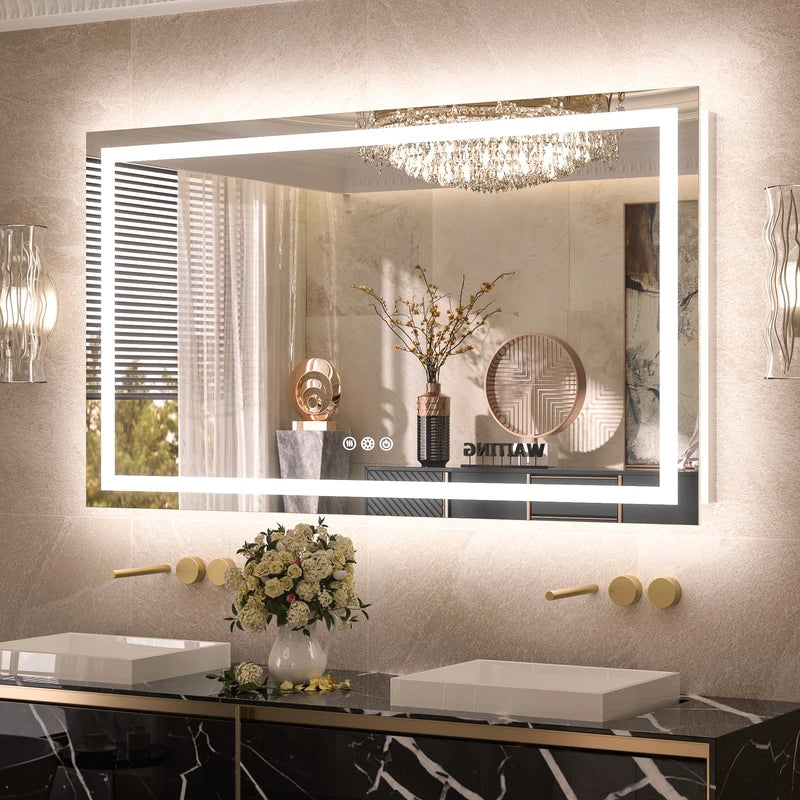
Vanity Mirror with Dual LED Lights
Front, back or combined lighting with CRI 90+, stepless dimming, memory and fast defogging.

Beveled Backlit Bathroom Mirror
A 25 mm beveled edge, soft halo and quick defogger with a listed one-hour shutoff.
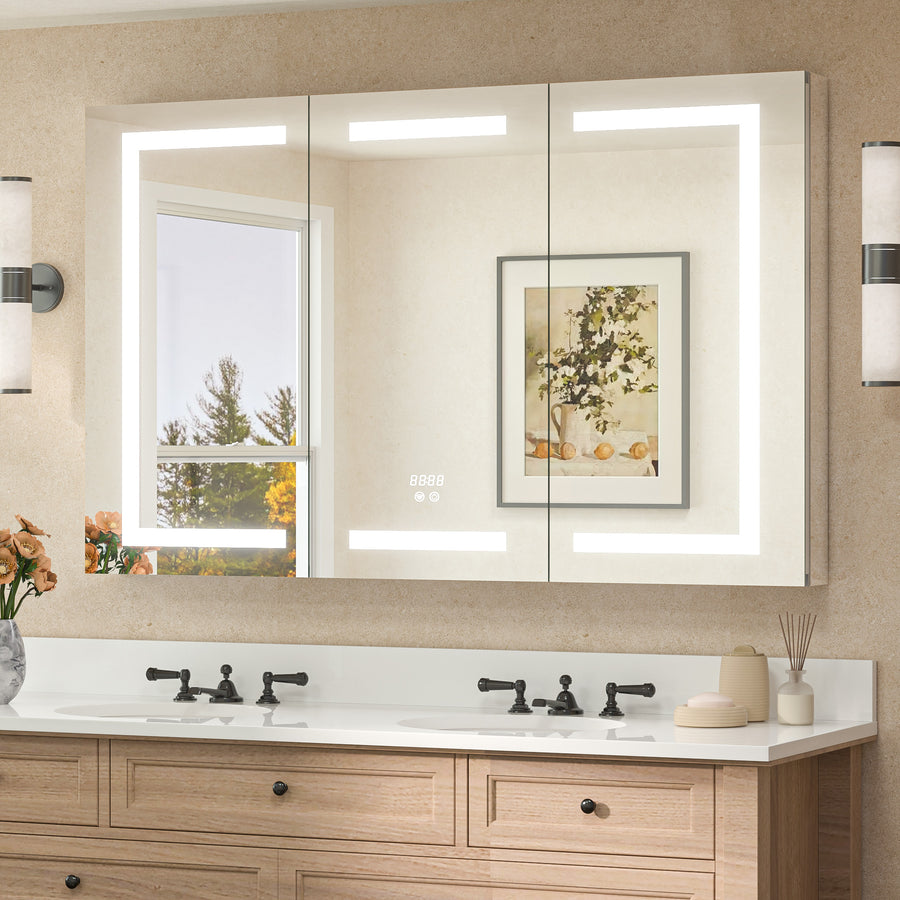
Dual-Lit LED Medicine Cabinet
Combines anti-fog visibility with adjustable shelves, interior light, outlets, USB ports and a digital clock.
Displayed ratings and review counts were checked August 31, 2026 and may change.
Is the upgrade worth it for your bathroom?
Probably yes
- You shower before grooming
- The mirror fogs daily
- Power is already available
- You also want LED lighting
- Several people share the room
Maybe
- Fog is occasional
- Ventilation is already good
- Installation requires moderate electrical work
- You value the feature but can wait for glass to clear
Probably not
- It is a powder room
- The room rarely steams
- A plain mirror is the design priority
- Adding safe power requires major wall work
- Your real issue is poor ventilation
If you repeatedly wipe or wait for your mirror after showering, built-in anti-fog is a small convenience you will notice almost every day. Choose the right mirror for its size and lighting first, then treat the defogger as a high-value practical feature.
Anti-fog mirror FAQs
Does an anti-fog mirror stay completely clear?
Usually the heated zone clears or resists fog first. The outer glass can still condense in a very steamy room.
Should I turn the defogger on before showering?
Often, switching it on before or at the start of the shower gives the pad time to warm the glass. Follow the instructions for the specific model.
Can an anti-fog mirror replace the exhaust fan?
No. The defogger improves visibility on the mirror; the fan removes humid air and helps protect the whole bathroom.
Do anti-fog mirrors use a lot of electricity?
Consumption depends on heater size, wattage and runtime. Check the selected product specification. Separate controls and auto shutoff help avoid unnecessary use.
Can I add a heating pad to an existing mirror?
Aftermarket pads exist, but installation involves electrical and compatibility considerations. Do not modify a mirror without following the pad and mirror manufacturers’ instructions and applicable electrical rules.
Are IP44 and IP65 anti-fog mirrors waterproof?
“Waterproof” is too broad. IP ratings describe specific protection levels under test conditions. The rating does not make every installation location safe; follow the manual and local bathroom-zone requirements.
Does a defogger reduce mirror cleaning?
It can reduce towel wiping and related streaks, but toothpaste, hairspray, dust and mineral residue still require normal gentle cleaning.
Stop wiping. Start with the right mirror.
Compare TETOTE lighted mirrors with adjustable illumination and built-in anti-fog convenience.
Shop anti-fog LED mirrors