How Bathroom Mirrors Transform Interior Design &Architecture
How Mirrors Transform Interior Design & Architecture
A mirror does more than reflect your image. In interior design and architecture, mirrors are powerful tools for manipulating light, visual space, and style. The right placement can make a dark room feel brighter, a narrow space feel wider, and an ordinary wall become a design focal point.
Explore the 3 RolesThree Roles of the Mirror
From a large decorative mirror in an entryway to an LED bathroom mirror above a vanity, mirrors combine function and aesthetics in almost any room. How do they change the way a space looks and feels? Let's explore their three most important roles — maximizing light, creating spatial illusions, and adding decoration.
Mirrors Can Maximize Light
One of the most useful applications of mirrors in interior design is their ability to reflect light. A strategically positioned mirror can bounce natural sunlight and artificial lighting around a room, helping the space appear brighter and more open.
How do mirrors make a room brighter? Mirrors don't create light themselves — instead they reflect existing light. For example, placing a large mirror opposite or near a window can reflect incoming daylight deeper into the room. Similarly, a mirror positioned near a light fixture can distribute artificial illumination across surrounding surfaces.
This can be particularly helpful in:
- Dark bathrooms
- Narrow hallways
- Small bedrooms
- Entryways without windows
- Apartments with limited natural light

Instead of placing a mirror randomly on the wall, consider what it will reflect.
- A mirror facing a window can reflect natural light.
- A mirror near a pendant or wall sconce can help distribute artificial light.
- A mirror facing an attractive architectural feature can emphasize that feature.
Mirrors Can Make Small Rooms Feel Bigger
Another reason designers use mirrors is to create the illusion of additional space. A mirror doesn't physically increase the size of a room, but its reflection can make the room appear deeper, wider, or more open.
How do mirrors create the illusion of space? When you see a reflection of the room behind you, your eyes interpret that reflected area as additional visual depth. This makes mirrors particularly effective in:
- Small bathrooms
- Narrow hallways
- Compact bedrooms
- Small apartments
- Narrow entryways
Large mirrors for small spaces. A large wall mirror can visually expand a small room more effectively than several small decorative mirrors. For example, an oversized mirror above a bathroom vanity can make the wall feel wider while also reflecting light from nearby fixtures. For especially compact spaces, a frameless mirror creates an even more seamless appearance.
Mirrors Can Become Architectural Focal Points
Mirrors aren't only functional — they can become one of the most noticeable decorative elements in a room. A carefully selected mirror can act as a focal point, similar to artwork, lighting, or architectural detailing.
Arched, Round & Oversized
Oversized, arched, and round mirrors introduce sculptural shape and soften hard architectural lines.
Framed & Metal-Framed
Decorative and metal-framed mirrors bring color, texture, and finish into the room.
LED & Backlit
LED, backlit, and mirrored medicine cabinets add a glowing architectural layer.
The design possibilities are almost endless: oversized mirrors, arched mirrors, round mirrors, decorative framed mirrors, metal-framed mirrors, LED mirrors, backlit mirrors, and mirrored medicine cabinets. The key is choosing a mirror that complements the architecture and design language of the room.
Mirrors in Bathroom Interior Design
Bathrooms are one of the most natural places to incorporate mirrors because they serve both a functional and decorative purpose. The bathroom mirror sits directly within the vanity area, making it an important part of the room's visual composition.
LED Bathroom Mirrors
LED mirrors combine reflection with integrated lighting. Instead of relying entirely on ceiling lights or wall sconces, an LED bathroom mirror provides additional illumination right around the vanity — with features like dimmable brightness, multiple color temperatures, front and back lighting, anti-fog, and smart memory. Beyond functionality, the soft glow of a backlit LED mirror adds depth and atmosphere to the bathroom.

Frontlit & Backlit LED Mirror

3-Lighting-Modes Mirror
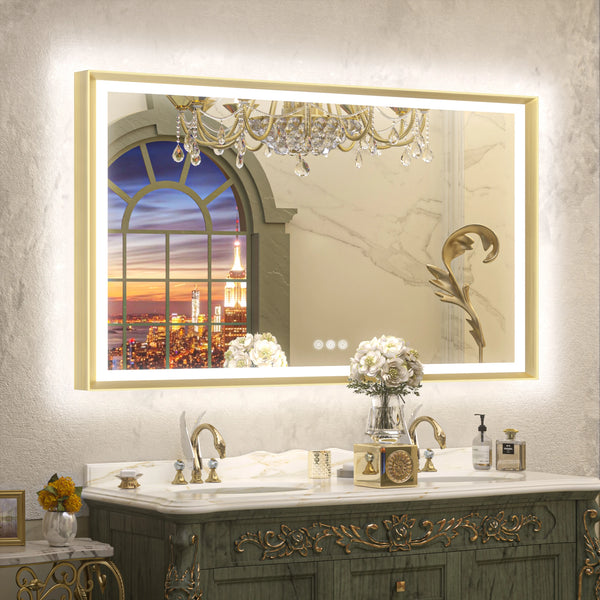
Dual-Lit Beveled Framed
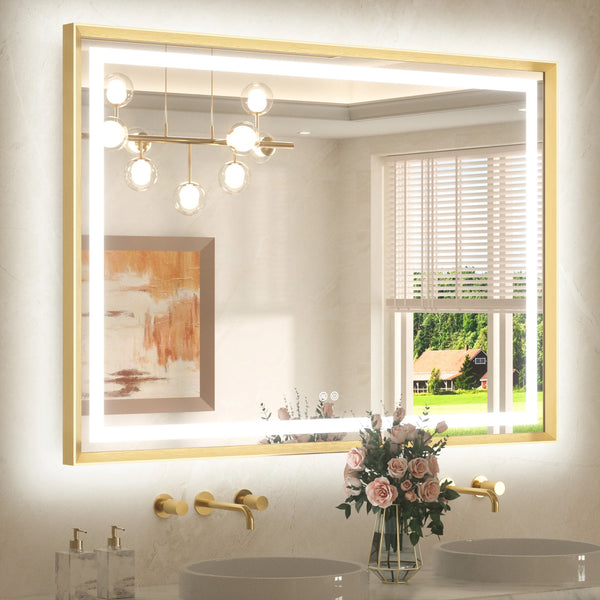
Framed Mirror with Lights
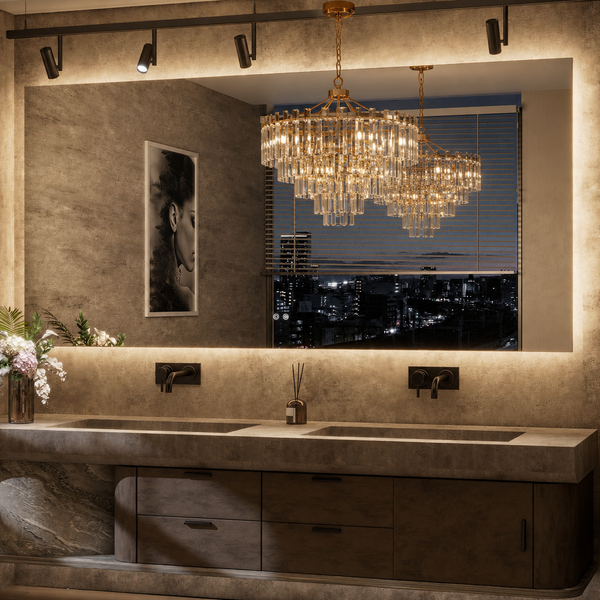
Backlit LED Mirror
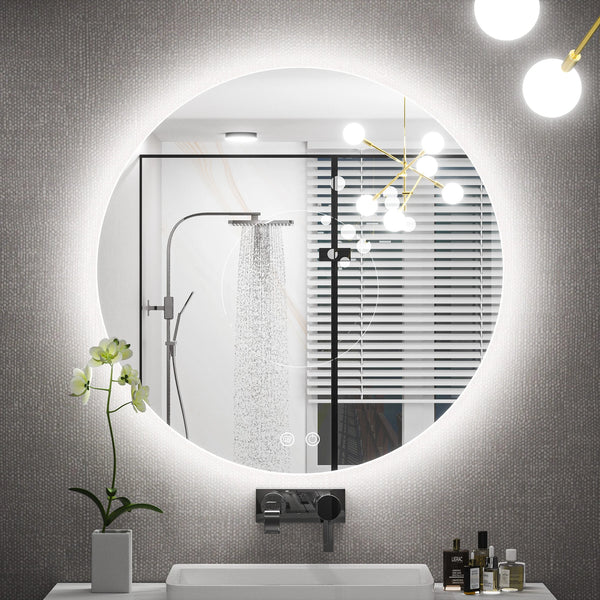
Round Backlit LED Mirror
Backlit Mirrors as Architectural Lighting
A backlit mirror can do more than illuminate your face. The light behind the mirror creates a subtle glow against the wall, adding another layer of illumination to the bathroom. This creates an interesting architectural effect: mirror → reflected image → LED glow → surrounding wall. The result is a vanity wall that feels more dimensional.
Backlit mirrors work particularly well in modern, contemporary, and minimalist interiors, plus spa-inspired and luxury bathroom designs.
Looking to use this effect at home? The soft halo of a backlit LED mirror above a vanity adds both task light and atmosphere — one fixture doing the work of a light fixture and a piece of decor.
Framed Mirrors as Decorative Elements
While frameless mirrors emphasize simplicity, framed mirrors introduce color, texture, and material into an interior. A frame can coordinate with other design elements such as faucets, cabinet hardware, light fixtures, shower frames, vanity finishes, and wall decor. A framed mirror can become a bridge between different materials and finishes throughout the room.
Popular frame finishes:
- Black — modern and dramatic
- Gold — warm and luxurious
- Bronze — classic and sophisticated
- Brushed Nickel — clean and contemporary
- Wood — natural and organic
Mirrors in Living Rooms
Mirrors aren't limited to bathrooms. In living rooms, mirrors help balance large walls, reflect natural light, and create a decorative focal point. Consider placing a large mirror above a fireplace, behind a sofa, across from a window, on a large empty wall, or above a console table.
For a minimalist living room, a simple oversized frameless mirror complements the architecture. For a traditional interior, an ornate or decorative framed mirror reinforces the room's character.
Mirrors in Entryways
An entryway is another excellent location for a mirror. A mirror near the entrance serves a practical purpose while making the space feel more welcoming. A large mirror reflects light and creates the impression of greater depth — particularly in narrow entryways.
For a functional entryway, pair a mirror with a console table, storage cabinet, bench, wall lighting, and decorative accessories. This creates a complete entryway composition rather than simply hanging a mirror on an empty wall.

Mirrors in Small and Narrow Spaces
Small spaces require thoughtful mirror placement. Instead of asking "Where can I fit a mirror?", ask "What should the mirror reflect?" — a simple change in thinking that can make a major difference. A mirror effectively creates a second visual layer in the room, so its reflection should be considered part of the overall interior design.
Good Things to Reflect
- Windows
- Natural light
- Attractive lighting
- Artwork
- Architectural details
- Open areas
Things to Avoid Reflecting
- Clutter
- Blank walls
- Messy storage
- Unattractive utility areas
How Mirror Size Changes a Room
Mirror size dramatically affects the perceived scale of a room. For bathrooms, a common starting point is a mirror approximately the same width as the vanity, or slightly narrower.
Creates a subtle decorative accent.
Balances function and decoration.
Creates a stronger sense of depth and openness.
Becomes a major architectural feature and visually expands an entire wall.
Horizontal vs. Vertical Mirror Placement
Mirror orientation influences how a space feels. Choosing orientation based on the room's proportions helps create a more balanced design.
Horizontal mirrors visually emphasize width — useful above wide vanities, double sinks, long console tables, and wide walls. Vertical mirrors emphasize height — useful on narrow walls, entryways, bedrooms, and tall architectural spaces.

Mirrors + Lighting: A Powerful Combination
One of the most effective design strategies is combining mirrors with intentional lighting — treating the mirror and lighting as one composition rather than separate elements.

How to Choose the Right Mirror for Your Interior
Before buying a mirror, consider five things.
Mirror Placement Mistakes to Avoid
Even a beautiful mirror can look out of place if it's positioned incorrectly.
Hanging a Mirror Too High
The mirror should sit at a comfortable viewing height — center the eye line near your face, not above it.
Ignoring the Reflection
Always check what will appear in the mirror — the reflection is part of the design.
Choosing Too Small a Mirror
A tiny mirror above a large vanity can make the wall feel unbalanced.
Overlooking Proportion
The mirror should work with the scale of nearby furniture and architecture.
Forgetting Functionality
A beautiful mirror without adequate lighting or storage may not meet everyday needs.
The Future of Mirrors in Interior Design
Reflection + Lighting + Storage + Technology
Modern mirrors are becoming more than decorative surfaces. Today's LED mirrors provide adjustable lighting, while LED medicine cabinets add concealed storage, outlets, USB charging, and defogging. This shift toward multifunctional design is especially valuable in smaller homes, where every inch of space matters.
Final Thoughts
Mirrors are one of the simplest ways to transform an interior. Used strategically, they can:
- Maximize light — by reflecting natural and artificial illumination.
- Create spatial illusions — by making small or narrow rooms feel wider and deeper.
- Add decoration — by becoming a focal point that complements the architecture and interior style.
From a minimalist frameless LED mirror to a decorative framed mirror or multifunctional LED medicine cabinet, the right mirror does much more than reflect your image — it helps shape how a room looks, feels, and functions. Choose the right mirror, place it thoughtfully, and let the reflection become part of the architecture.