Medicine Cabinet with Mirror: Styles, Sizes, Features & Installation
Medicine Cabinet with Mirror: Styles, Sizes, Features & Installation
Everything you need to choose the right mirrored medicine cabinet — recessed, surface mount, or LED — plus how to size it to your vanity and get it installed correctly.
What Is a Medicine Cabinet with Mirror?
A medicine cabinet with mirror is a wall-mounted storage unit — recessed into the wall or mounted on its surface — with a mirrored door that doubles as your everyday vanity mirror. Unlike a standalone bathroom cabinet with mirror that just hangs flat against the wall, a true mirrored medicine cabinet opens to reveal shelving behind the glass, so you get storage and reflection in a single fixture. Modern versions go further: LED medicine cabinets with mirror build lighting, anti-fog, and even power outlets directly into the unit, turning it into the functional center of a daily grooming routine.
Benefits of a Mirrored Medicine Cabinet
Two functions, one fixture
Skip mounting a separate mirror — the cabinet door does both jobs, freeing up wall space.
Hides bathroom clutter
Toiletries, medications, and grooming tools stay behind a closed door instead of on the counter.
Built-in grooming light
LED models put light exactly where you need it — no more relying on a single overhead fixture.
Flexible mounting
Recessed for a flush, built-in look, or surface mount for an easier install — your call.
Adds resale value
A modern medicine cabinet reads as a real bathroom upgrade, not just a fixture swap.
Scales to any vanity
From a 16" powder room unit to a 48" double-vanity cabinet, sizing flexes to your space.
Recessed Medicine Cabinets
Installs flush into the wall cavity for a built-in, architectural look. Every model below also supports surface mounting if you'd rather skip cutting into drywall.
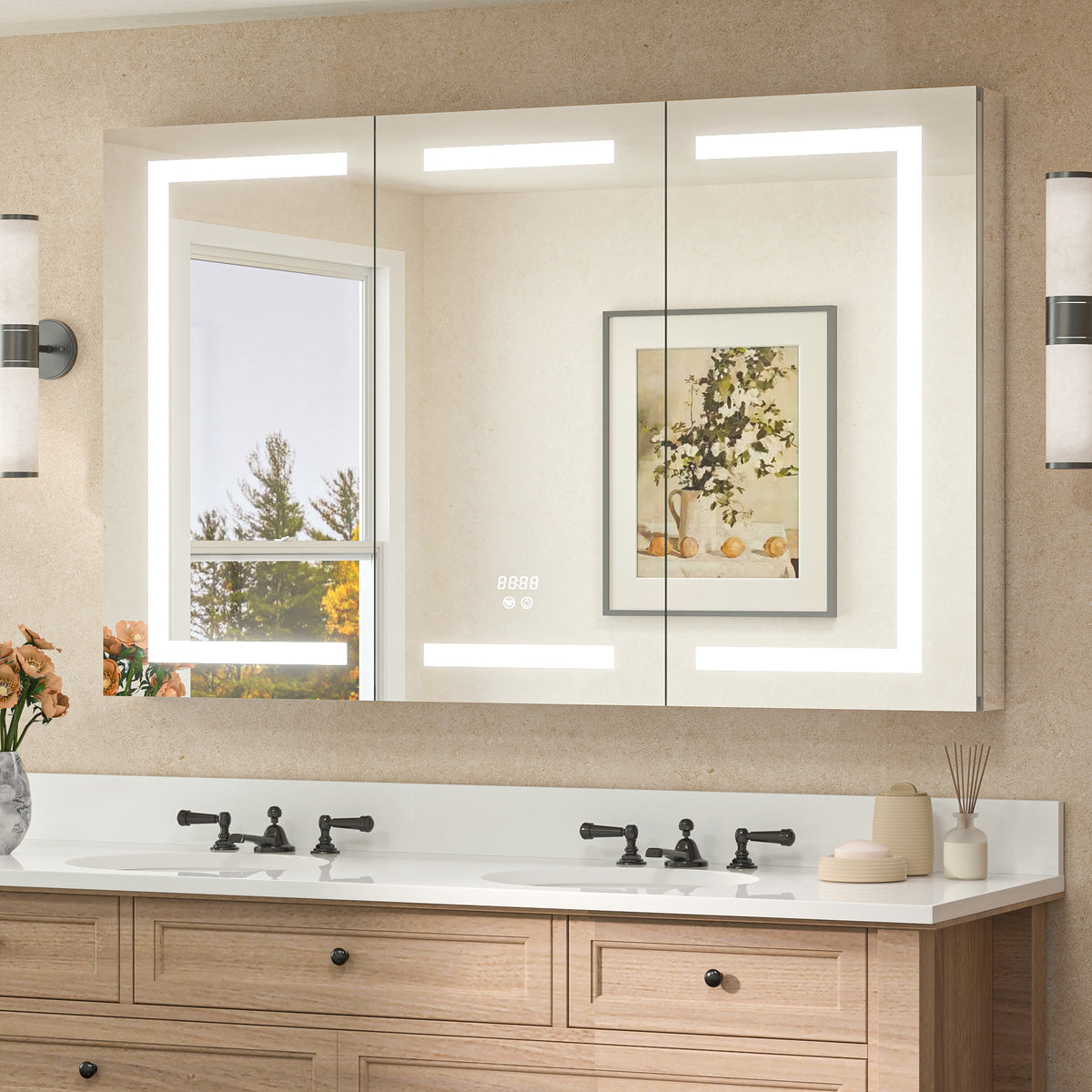
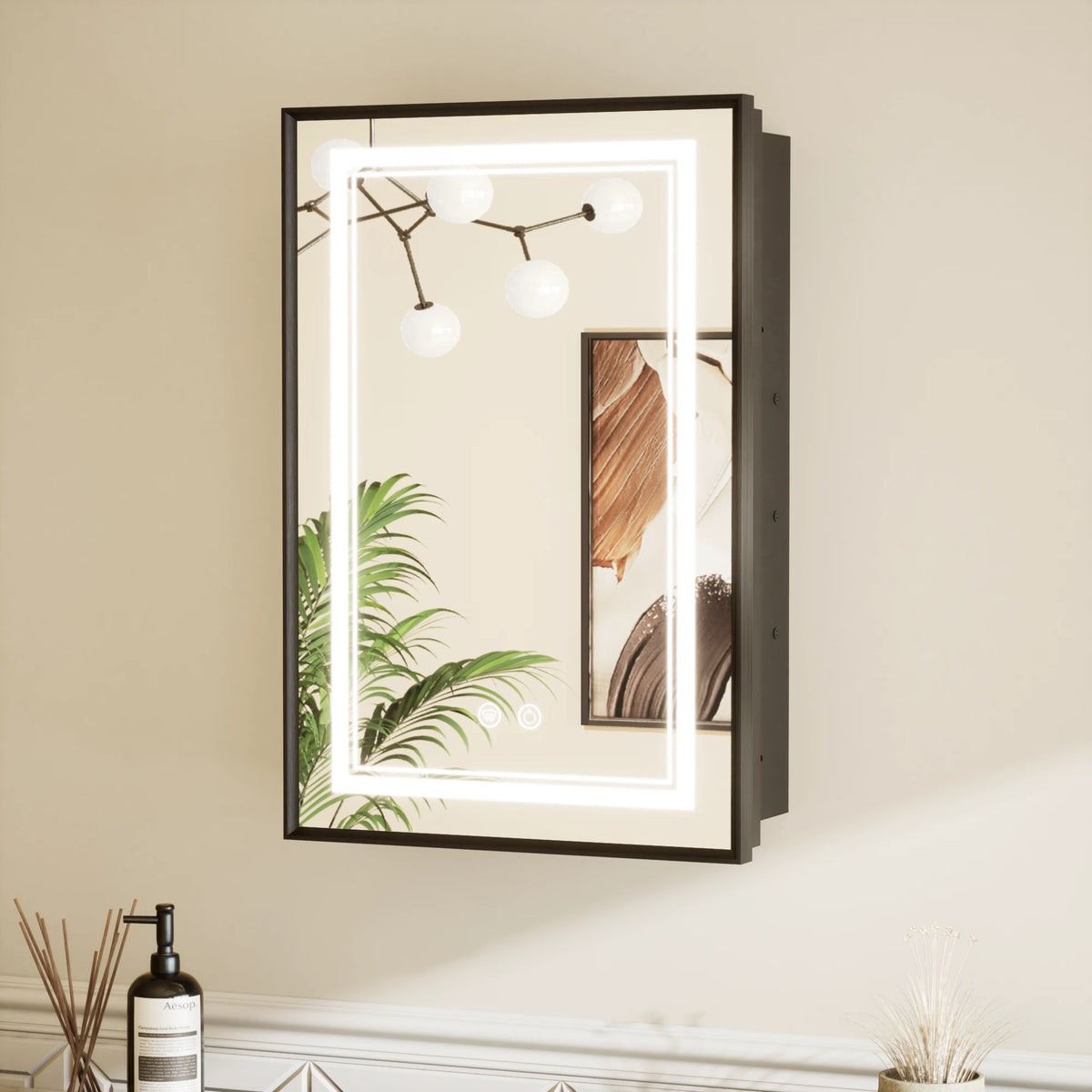
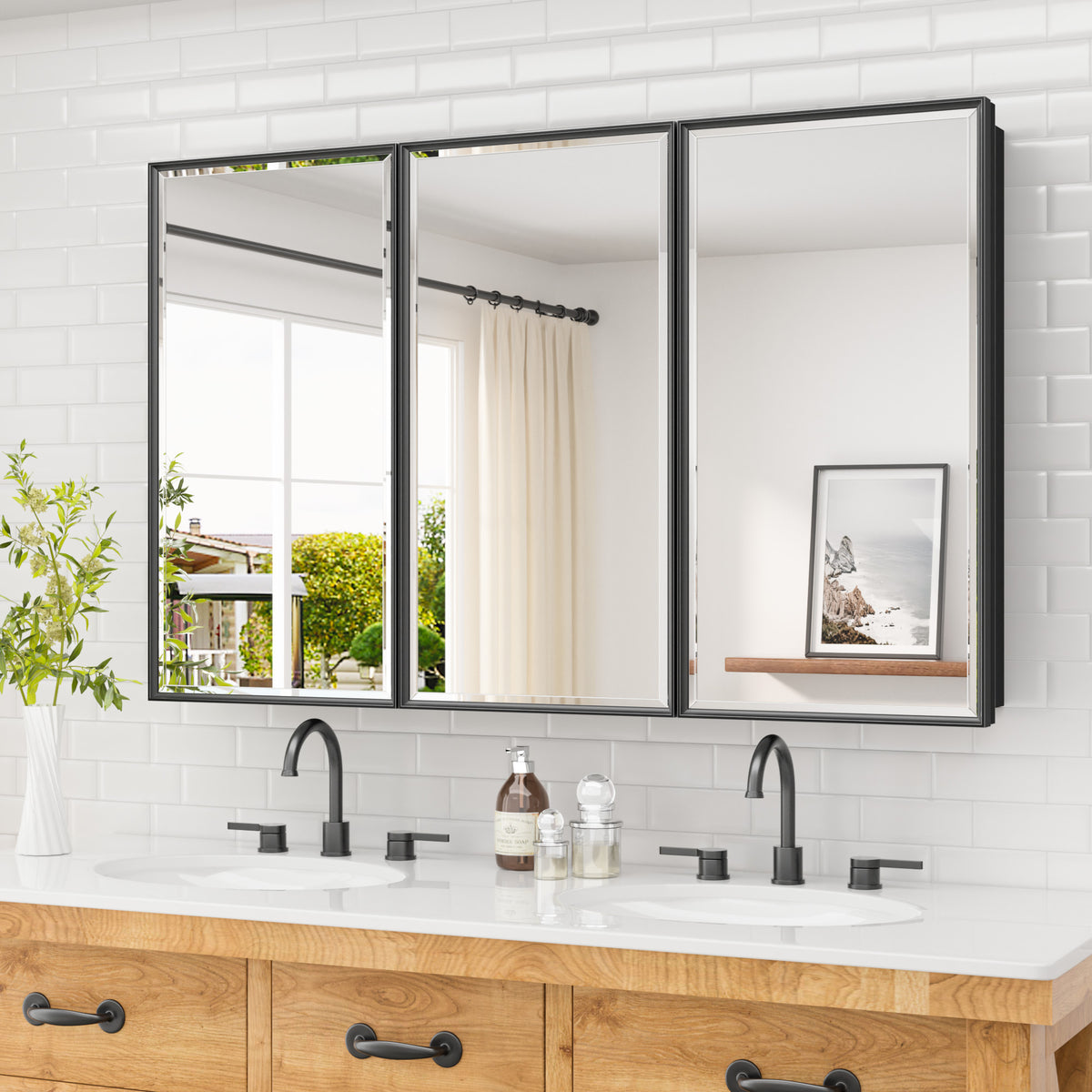


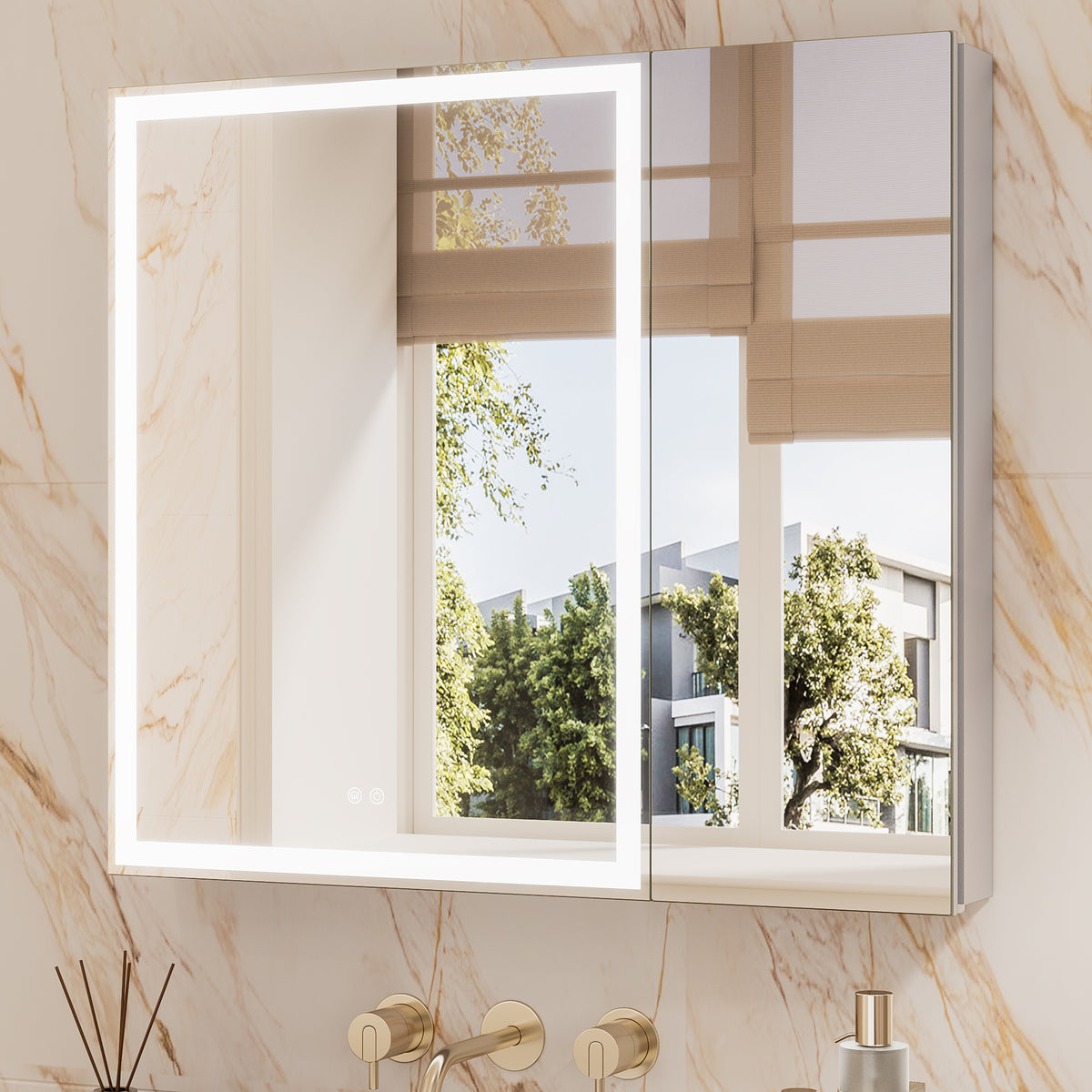
Surface Mount Medicine Cabinets
Mounts on top of the wall instead of into it — the simpler install, especially for renovations. Includes every model above plus three surface-only designs.
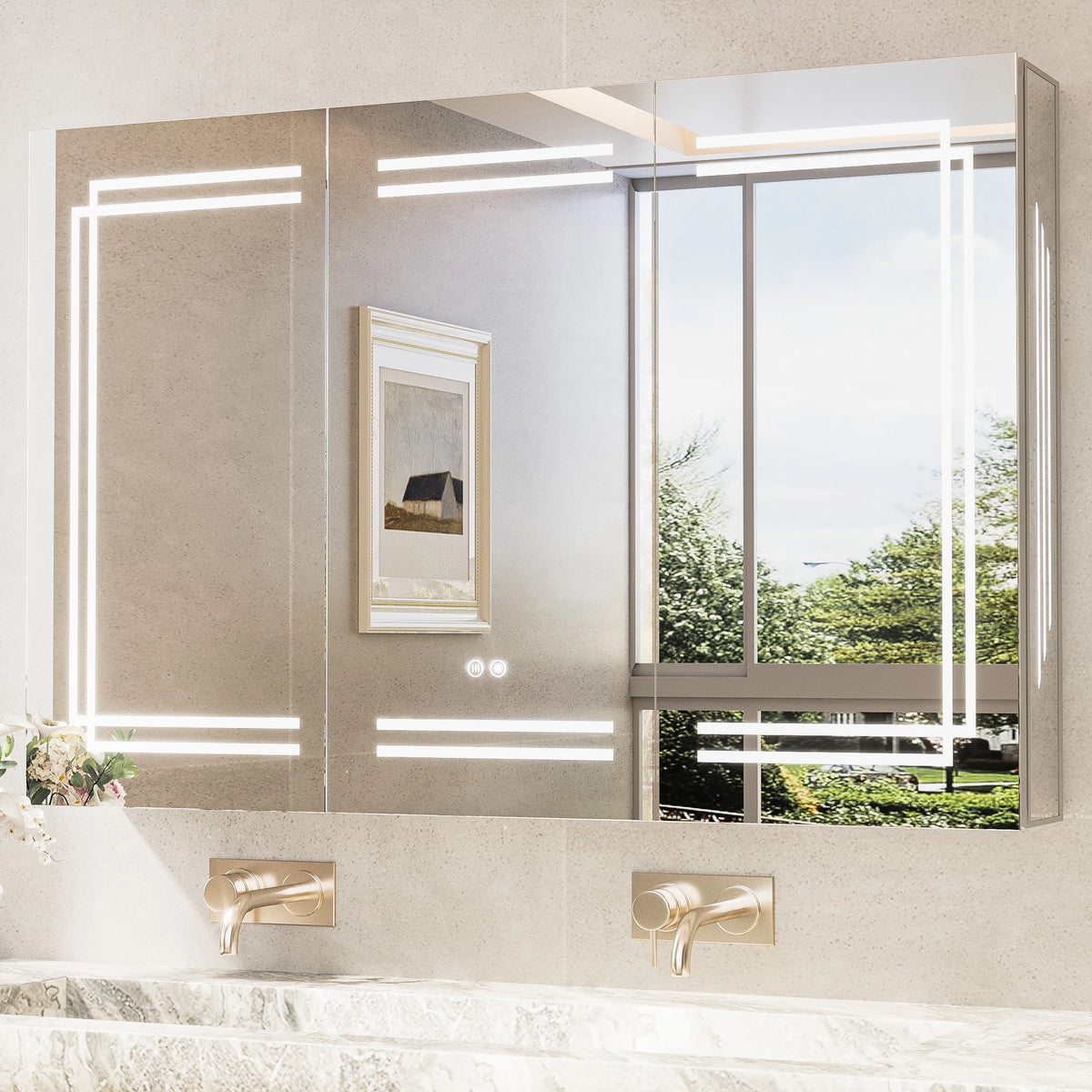
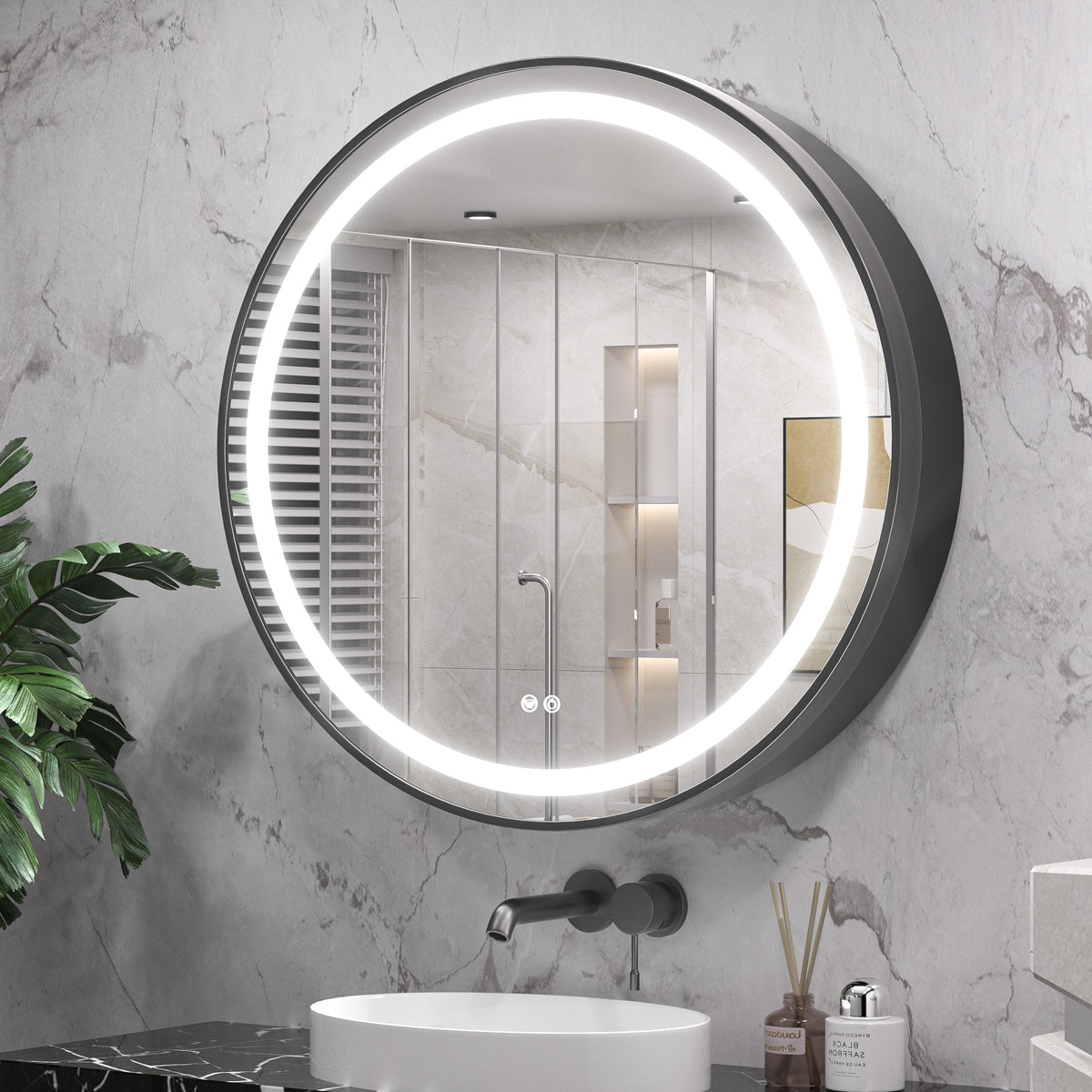
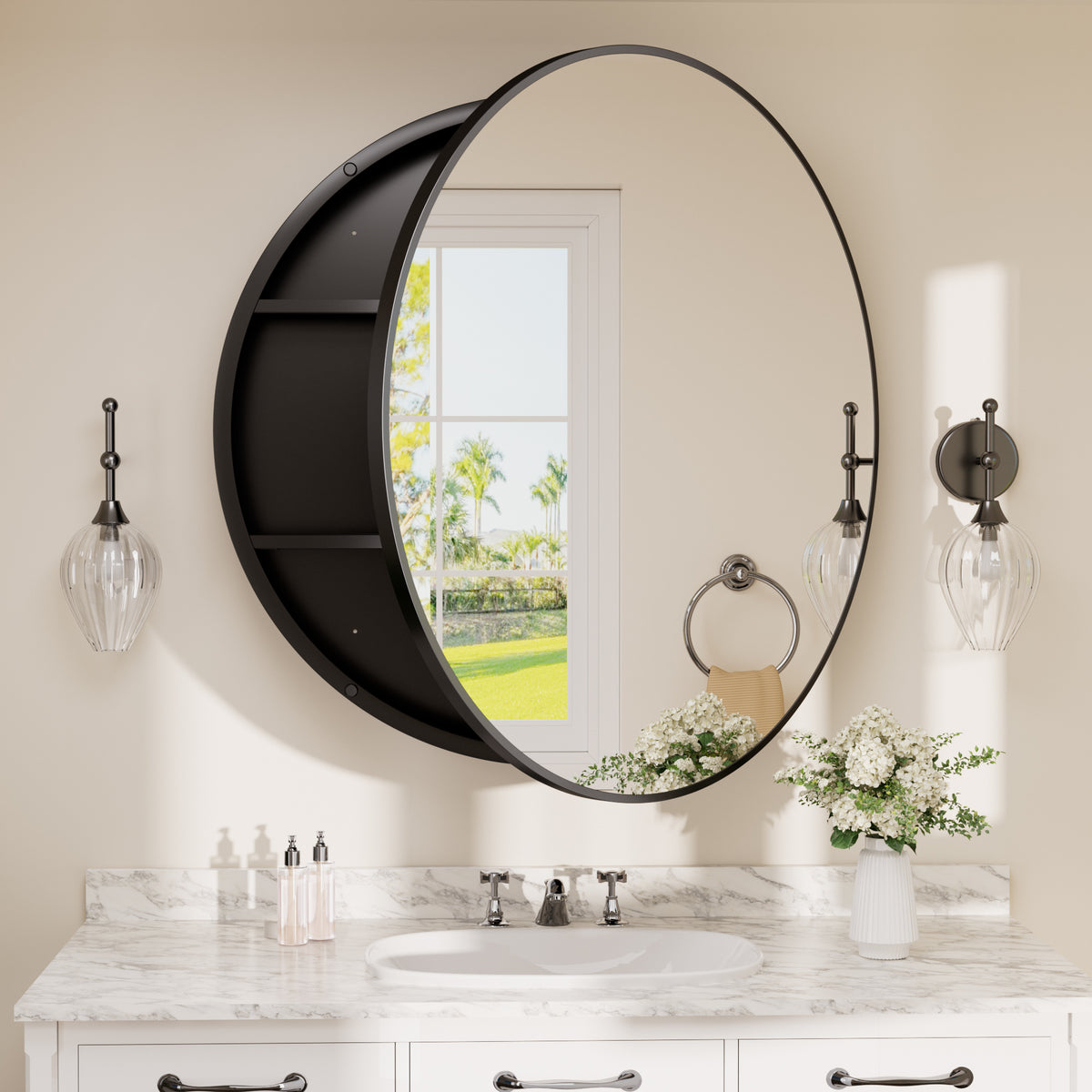
LED Medicine Cabinets
The full lit-mirror lineup in one place — front lighting, 3 color temperatures, anti-fog, and memory settings across four models.


How to Choose the Right Size
Four things drive the decision: your vanity's width, the wall space around it, how you plan to light the space, and whether one large cabinet or two smaller ones makes more sense.
Here's TETOTE's practical starting point — base the cabinet width on your vanity width, then adjust from there.
| Vanity Width | Suggested Cabinet Width |
|---|---|
| 30" | 24"–26" |
| 36" | 28"–32" |
| 42" | 32"–36" |
| 48" | 36"–42" |
| 60" (single sink) | 48"–54" |
| 60" (double sink) | Two 20"–26" cabinets, or one 50"–54" cabinet |
| 72" (double sink) | Two 28"–32" cabinets, or one 60"–66" cabinet |
Must-Have Features
Five features worth prioritizing on any modern medicine cabinet.
LED Lighting
Front-facing light for true, shadow-free grooming.
Anti-Fog
Clears condensation fast after a hot shower.
USB / Outlet
Charge devices inside the cabinet, off the counter.
Adjustable Shelves
Reposition shelving to fit taller bottles and bins.
Soft-Close Hinges
Quiet, controlled closing — no slamming.
Installation Tips: Recessed vs. Surface Mount
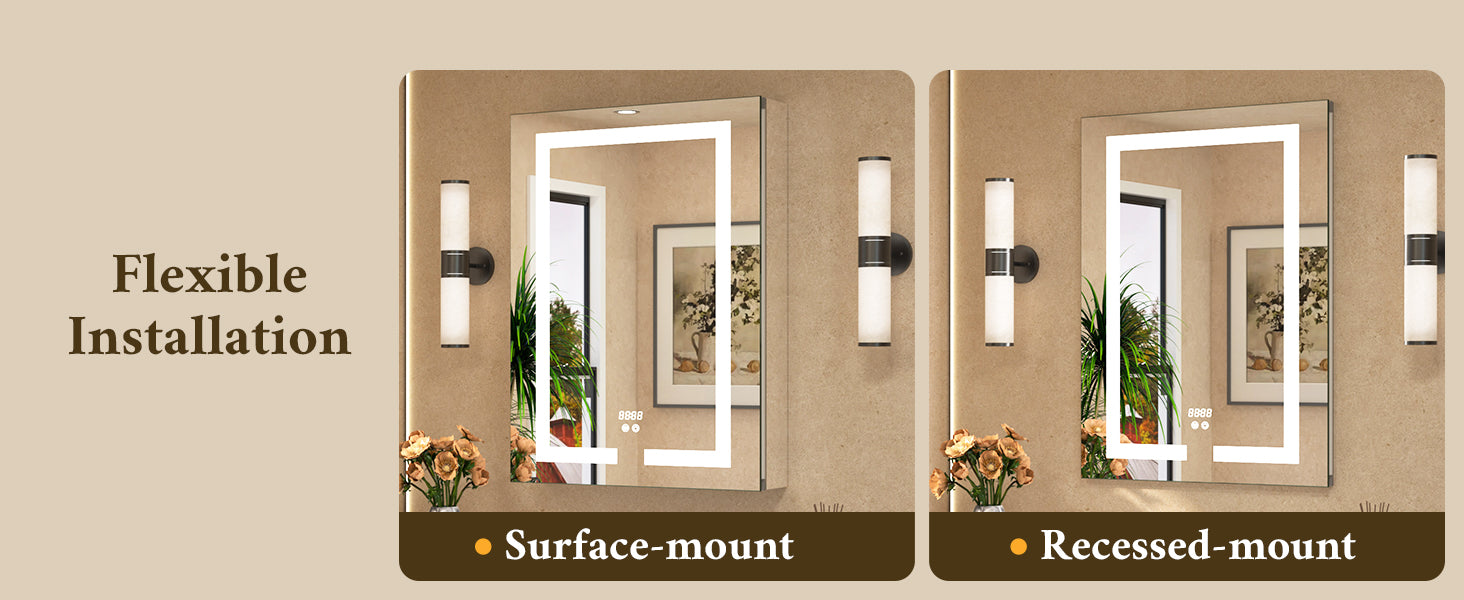
Which installation fits your wall?
Recessed installation sits the cabinet flush inside the wall cavity for a built-in, architectural look — but it requires cutting into drywall and confirming there's no plumbing or wiring in that section of wall. Surface mount installs directly on top of the wall using anchors, which is faster, more forgiving of wall obstructions, and easier for a DIY project.
- Flush, built-in look
- Requires wall cavity depth (usually 3.5"+)
- Check for studs, pipes, wiring first
- Best planned during renovation
- Mounts on top of drywall
- No cavity depth needed
- Faster, more DIY-friendly install
- Good for retrofits without renovation
Best Medicine Cabinet Placement Ideas
Centered over a single vanity
The classic placement — center the cabinet over the sink, roughly 2" narrower than the vanity below for full door clearance.
Two cabinets over a double vanity
Rather than one oversized unit, mount two smaller cabinets centered over each sink — better sightlines for two people getting ready at once.
Recessed between wall studs
Standard 16" stud spacing fits most 14"–15" wide recessed cabinets without cutting a stud — check spacing before choosing a recessed width.
Round cabinet as a powder room accent
A round medicine cabinet softens a small powder room and works well off-center as a design statement rather than strictly over the sink.
LED cabinet as the primary light source
In a windowless bathroom, a front-lit LED cabinet with 3 color temperatures can supplement or even replace a dedicated vanity light bar.
Frequently Asked Questions
What's the difference between a medicine cabinet with mirror and a regular bathroom mirror?
A mirrored medicine cabinet opens to reveal storage shelving behind the glass, while a standalone bathroom cabinet with mirror is typically just a flat mirror mounted to the wall with no storage function.
Can a recessed medicine cabinet with mirror go in any wall?
Not always — recessed installation needs enough wall cavity depth (usually at least 3.5") and no plumbing, wiring, or studs in the way. Surface mount is the safer choice if you're unsure what's inside the wall.
Do LED medicine cabinets need a hardwired connection?
Most LED medicine cabinets with mirror ship with a power cord for a standard plug-in install, with the option to hardwire to a wall switch if you prefer a cleaner look. An electrician is only needed for the hardwire option.
What size medicine cabinet fits a 36-inch vanity?
A 28"–32" wide cabinet is the general sweet spot for a 36" vanity, leaving roughly an inch of clearance on each side for the door to swing freely.
Is a modern medicine cabinet worth the extra cost over a basic model?
If you use the mirror daily for grooming, features like LED lighting, anti-fog, and memory settings solve real everyday friction. For a guest bath or secondary bathroom, a basic non-LED cabinet often covers the need for less.