Electric Medicine Cabinet Safety Tips for Daily Grooming
A colorful, practical guide to LED lighting, outlets, USB charging, anti-fogging and safer everyday use around bathroom moisture.
An electric medicine cabinet brings light, storage and power into one of the most moisture-prone rooms in the home. Used correctly, it can clear countertop clutter, illuminate grooming and keep the mirror useful after a hot shower.
Safety depends on the whole system: a suitable product, secure mounting, correct circuit protection, dry electrical components and sensible daily habits.
Five LED Medicine Cabinets, Five Different Feature Sets
Safety starts with understanding what is inside the cabinet. Confirm ratings and instructions for the specific model instead of applying one cabinet’s specifications to the entire collection.

Dual-Lit LED Medicine Cabinet
Front and interior light with concealed power and flexible mounting.

Trio-Lit LED Medicine Cabinet
Front, interior and side illumination with a double-sided mirror.

Framed LED Medicine Cabinet
Three-color grooming light, two outlets and IP44-rated construction.

Medicine Cabinet Mirror with Lights
High-CRI lighting, two AC outlets and stepless shelf adjustment.
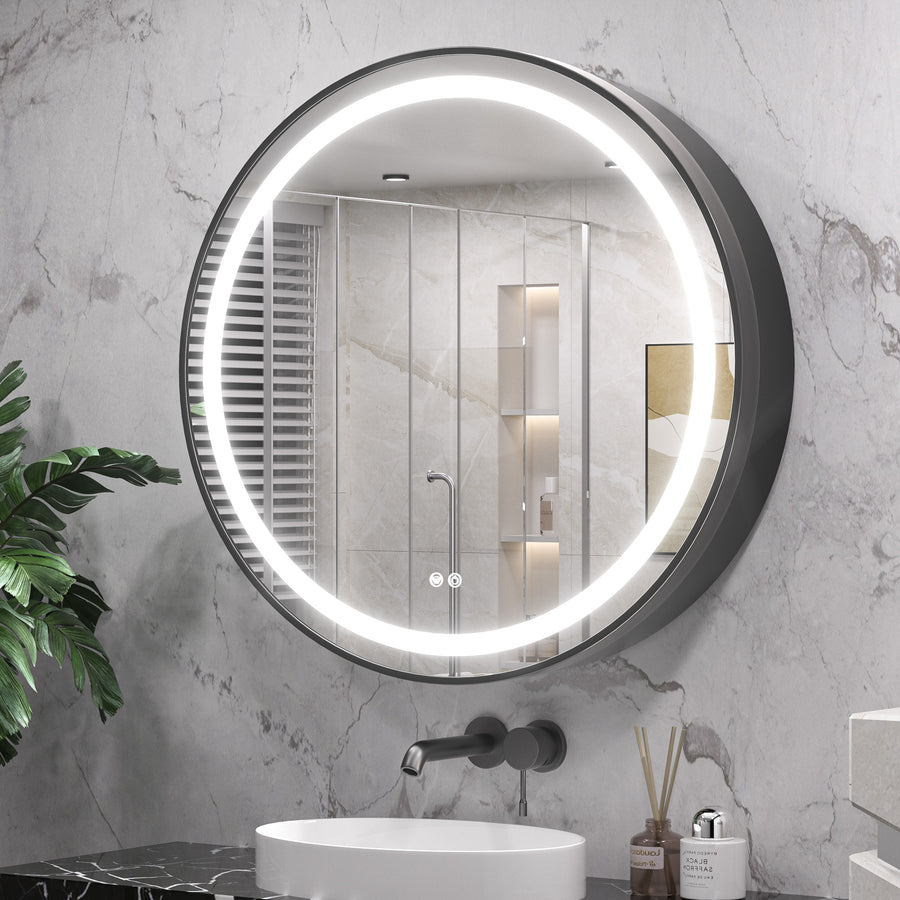
Round LED Medicine Cabinet
Surface-mounted circular storage with lighting, power and defogging.
Why Electric Medicine Cabinet Safety Matters
Bathrooms combine water, electricity, glass and a heavy wall-mounted fixture. A smart cabinet may contain LED drivers, receptacles, USB circuits, touch controls and a heating pad behind the mirror. Correct installation and dry daily use keep those conveniences working as intended.
Choose a Safe Location
Install only where permitted by the cabinet’s damp-location or moisture rating and instructions. Keep it out of direct sink and shower spray. Check vanity width, wall structure, mounting support, door swing, plumbing and wiring before drilling or opening a recessed cavity.
Use the Correct Electrical Connection
Use only the specified grounded circuit and approved plug-in or hardwired method. Never rely on an exposed splice, damaged cord, loose plug or permanent extension cord. Position cords so doors and hinges cannot pinch them.
Confirm GFCI Protection
Ground-fault circuit interrupters quickly disconnect power when leakage creates a shock risk. Bathrooms require GFCI protection under the National Electrical Code, subject to the rules adopted locally. Have an electrician verify how the cabinet’s circuit should be protected.
Test GFCI outlets or breakers monthly using their TEST and RESET procedure. If the test fails, stop relying on that protection and arrange replacement.
Keep Electrical Openings Dry
- Do not spray cleaner or water directly onto the cabinet.
- Keep outlets, USB ports, controls and connections dry.
- Do not use electrical controls with dripping-wet hands.
- Remove leaking bottles immediately.
- Apply approved cleaner to a microfiber cloth.
If water enters an electrical area, do not touch or operate wet equipment. Shut off the circuit from a safe, dry location if possible and obtain professional help.
Respect Outlet and USB Ratings
Check the cabinet’s maximum load and the connected device’s requirements. MC002, MC010, MC015 and MC004 do not all provide the same outlet configuration or rating.
- Never overload an internal receptacle.
- Do not use damaged chargers or frayed cables.
- Unplug portable grooming appliances when not in use.
- Let warm tools cool completely before storage.
- Never close a hot hair tool inside the cabinet.
Organize Storage Around Power
Keep electrical areas visible rather than burying them behind bottles and cords. Store liquids upright, place heavy items low and keep cables away from hinge movement. Do not block any opening identified as ventilation by the manufacturer.
Medication storage requirements vary. Bathroom humidity may be unsuitable, so follow each label and ask a pharmacist when uncertain.
Use LED Lighting Responsibly
Do not modify LED strips, drivers or touch controls. Persistent flickering, repeated shutoff, buzzing, odor or abnormal heat is not a cue to keep tapping the switch; it is a reason to stop the affected feature and contact support.
Use the Defogger as Designed
The anti-fog pad heats a defined mirror zone. Do not cover the mirror with a towel while it operates. Use the one-hour automatic shutoff where supplied and continue running the exhaust fan—the defogger clears reflection, while ventilation removes room moisture.
Inspect Glass, Doors and Mounting
Every few weeks, look for cracked glass, loose outlets, corrosion, door misalignment, damaged cords or movement at the wall. Do not yank the cabinet to test it. If mounting appears loose, stop using the door and arrange an inspection.
Protect Children
Keep chargers, cords, sharp grooming tools and personal-care products out of reach. Unplug portable appliances where appropriate. Ask an electrician whether accessible receptacles need tamper-resistant protection for your household and location.
Never Modify Internal Electrical Parts
Do not cut wiring, drill into unknown electrical areas, remove protective covers, add an outlet or heating pad, or substitute incompatible parts. Unauthorized changes can create shock or fire hazards and affect certification or warranty coverage.
Keep the Exact Manual
Store the model number, receipt and manual together. Mounting, outlet loads, power entry, defogger controls and cleaning instructions vary across the five cabinets above. Use the guide for the exact model and size—not one that merely looks similar.
Stop Use and Turn Off Power Safely If You Notice
- Sparks, smoke or burning odor
- Hot or discolored outlet
- Crackling, sizzling or buzzing
- Water inside electrical areas
- A tingling feeling or shock
- Repeated GFCI or breaker trips
- Exposed or damaged wiring
- Unusual mirror or driver heat
Do not touch wet electrical equipment. Shut off the affected circuit from a safe, dry location if you can do so safely, then contact a licensed electrician and TETOTE support.
Daily Safety Checklist
- Outlets, USB ports and controls are dry.
- Chargers, cords and plugs are undamaged.
- Built-in outlets are not overloaded.
- No warm styling tool is stored inside.
- Bottles are closed, upright and not leaking.
- Door hinges and shelves move normally.
- LEDs and defogger produce no abnormal heat, noise or odor.
- Cleaner is placed on a cloth—not sprayed at the cabinet.
- Unusual electrical behavior is investigated instead of repeatedly reset.
Monthly and Annual Safety Checks
| Frequency | What to inspect | What to do |
|---|---|---|
| Monthly | GFCI TEST and RESET function | Follow the device instructions; contact an electrician if it fails. |
| Monthly | Cords, outlets, USB ports and controls | Stop use for moisture, damage, heat, looseness or discoloration. |
| Quarterly | All LED colors, dimming, memory and defogger | Confirm normal operation without flicker, odor or excess heat. |
| Annually | Mounting, shelves, hinges and door alignment | Use only approved adjustments; seek support for major movement. |
Are TETOTE Electric Medicine Cabinets Safe?
A TETOTE LED medicine cabinet can be a safe, practical bathroom upgrade when the selected model is suitable for the location, securely mounted, correctly powered and used within its ratings. Review the exact certification and moisture-protection specifications because they vary by model.
No product feature replaces safe behavior. Keep electrical openings dry, use GFCI protection where required, avoid overload and respond immediately to warning signs.
Electric Medicine Cabinet Safety FAQs
Does an electric medicine cabinet need GFCI protection?
Bathrooms require GFCI protection under the National Electrical Code. The exact protection for a cabinet depends on the connection, equipment and locally adopted rules. Have a licensed electrician verify it.
Can I plug a hair dryer into a cabinet outlet?
Only when the cabinet manufacturer permits it and the appliance stays within the listed outlet and combined-load ratings. Never store a hot dryer inside the cabinet.
Can I spray glass cleaner on the LED mirror?
No. Apply an approved cleaner to a microfiber cloth and keep liquid away from seams, edges, controls, outlets, USB ports and hinges.
What should I do if water reaches an outlet?
Do not touch or use the wet equipment. Turn off the affected circuit from a safe, dry location if possible and contact an electrician and the manufacturer.
Can I hardwire the cabinet myself?
Hardwired bathroom work presents shock, fire and code risks. Use a licensed, qualified electrician unless local law and your professional qualifications clearly permit the work.
Is the anti-fog heater safe to leave on?
Use it only as directed and rely on automatic shutoff where supplied. Never cover the heated area, and stop use if you notice unusual odor, excessive heat or abnormal operation.
Explore the Full TETOTE LED Medicine Cabinet Collection
Compare lighting zones, outlet configurations, installation methods, sizes and current safety-related specifications.
Shop LED medicine cabinetsGeneral safety information only. Electrical codes, installation requirements and product specifications vary. Details and review counts were checked in August 2026.