Hardwired vs. Plug-In LED Medicine Cabinets
Hardwired vs. Plug-In LED Medicine Cabinets
One technical detail matters as much as size, storage, and lighting: how the cabinet gets its power. Here's the full comparison to help you choose the right electrical configuration before you buy.
When choosing an LED medicine cabinet, most homeowners focus on size, storage, lighting, and design. But how the cabinet receives power is equally important. LED medicine cabinets are commonly available in two electrical configurations: hardwired and plug-in. Both can provide excellent lighting and functionality, but they differ in installation, appearance, flexibility, and electrical requirements.
The right choice depends on your bathroom layout, renovation plans, existing electrical setup, and installation preferences.
What Is a Hardwired LED Medicine Cabinet?
Connects directly to the home's electrical wiring via an electrical junction box, typically inside the wall, instead of a visible power cord and outlet. Creates a clean, integrated installation with minimal visible wiring. Common in:
- New bathroom construction
- Major bathroom renovations
- Luxury residential projects
- Hotel bathrooms and commercial developments
- Custom bathroom installations
What Is a Plug-In LED Medicine Cabinet?
Uses a standard electrical power cord that connects to a wall outlet. Installation is generally simpler since the cabinet doesn't need to be directly connected to the home's electrical wiring. Useful for:
- Bathroom upgrades
- Rental properties
- DIY-friendly projects
- Existing bathrooms
- Locations where wiring is already conveniently positioned
The power cord and outlet need to be properly positioned so they don't negatively affect the cabinet's appearance.
Hardwired vs. Plug-In LED Medicine Cabinets
| Feature | Hardwired | Plug-In |
|---|---|---|
| Power connection | Direct electrical wiring | Standard power outlet |
| Visible cord | No | Usually yes |
| Appearance | Clean and integrated | Simple but may show wiring |
| Installation | More involved | Easier |
| Professional electrician | Often recommended | Often unnecessary for basic install |
| Flexibility | Lower | Higher |
| Best for new construction | Excellent | Good |
| Best for renovations | Excellent | Excellent |
| Easy relocation | More difficult | Easier |
| Smart features | Available | Available |
| Long-term appearance | Premium | Practical |
| Initial installation complexity | Higher | Lower |
12 Things to Know Before You Choose
Installation Difference
Hardwired: position the cabinet, prepare the electrical junction box, route the wiring, connect per manufacturer instructions, secure to the wall, then test lighting and electrical functions. Because electrical work is involved, professional installation may be recommended or required depending on local codes.
Plug-in: generally requires fewer electrical modifications — the cabinet is installed on the wall and the power cord connects to an appropriate outlet, which can be faster when the bathroom already has a properly positioned outlet.
Which Looks Better?
Hardwired LED medicine cabinets generally provide the cleaner appearance — no visible power cable running to an outlet. This matters most for minimalist and luxury bathroom designs where visual clutter should be minimized. A plug-in model can still look excellent, but the outlet and cord need to be carefully planned.
Hardwired Cabinets Are Ideal for Luxury Bathrooms
Hardwired installation lets the medicine cabinet become part of the overall electrical and architectural design rather than looking like an added appliance — pairing well with floating vanities, frameless mirrors, recessed cabinets, large-format tile, marble walls, and minimalist or contemporary interiors.
Plug-In Cabinets Offer More Flexibility
Because the cabinet connects to a standard outlet, it can be easier to install without modifying existing wiring — useful when remodeling an existing bathroom, replacing an old cabinet, renting a property, avoiding major electrical work, or testing a cabinet before permanent installation. Plug-in models also make future replacement or relocation easier.
Which Is Better for Bathroom Renovations?
Major remodel: if the walls are already open, adding or relocating wiring may be straightforward — a hardwired cabinet can be an excellent long-term solution.
Minor upgrade: if you're simply replacing an existing mirror or cabinet, a plug-in model may be more convenient and reduce the electrical work required.
Consider Recessed Installation
Installation type is separate from mounting type. An LED medicine cabinet can be:
- Recessed and hardwired
- Recessed and plug-in
- Surface-mounted and hardwired
- Surface-mounted and plug-in
A recessed hardwired cabinet is one of the cleanest combinations for a luxury bathroom, since the cabinet sits within the wall while the electrical connection stays concealed. For existing bathrooms where wall modification is difficult, surface-mounted plug-in models are a more practical alternative.
Electrical Safety Matters
Bathrooms are wet environments, so electrical installation should be taken seriously. Before installing, verify voltage requirements, required circuit specifications, appropriate outlet placement, grounding requirements, bathroom electrical regulations, required protection devices, and the manufacturer's installation instructions. Never assume an existing bathroom outlet is suitable for every LED medicine cabinet — use a qualified electrician for hardwired installations when required by local regulations or when you're not experienced with electrical work.
What About GFCI Protection?
Many bathroom electrical installations require ground-fault circuit-interrupter (GFCI/RCD) protection, and exact requirements vary by country and jurisdiction. Always follow the applicable local electrical code and the manufacturer's installation requirements — never install an LED medicine cabinet by simply copying the wiring arrangement from another bathroom.
Smart Features and Power Connections
Modern LED medicine cabinets can include anti-fog heating, touch switches, motion sensors, USB charging, electrical outlets, Bluetooth speakers, digital clocks, dimmable LEDs, and adjustable color temperature — all of which can affect the cabinet's electrical requirements. Check the manufacturer's complete electrical specifications rather than focusing only on LED wattage.
Cost Considerations
A plug-in cabinet often has a lower installation cost since it may require less electrical modification. A hardwired model may involve additional labor for electrical wiring, junction box installation, circuit modifications, wall preparation, and professional electrician services. The total project cost depends heavily on the existing electrical infrastructure — if wiring is already available behind the planned location, the difference may be relatively small.
Which Is Better for Small Bathrooms?
Both configurations can work well. A hardwired cabinet provides a cleaner visual appearance since there's no visible power cord, helping maintain a minimalist look. A plug-in cabinet may be preferable if the bathroom is already finished and installing new wiring would require significant wall work. In either case, a recessed cabinet helps maximize available space.
Which Is Easier to Replace?
Plug-in models generally offer greater flexibility for replacement — the cabinet can be disconnected from the outlet without modifying the home's permanent wiring. Hardwired cabinets require the electrical connection to be properly disconnected before removal. If you expect to replace the cabinet frequently, a plug-in model may offer more convenience; for long-term installations, hardwired models provide a more integrated solution.
Hardwired or Plug-In: Which Should You Choose?
Choose Hardwired If:
- You're building a new bathroom
- You're completing a major renovation
- You want a clean, cord-free appearance
- You're designing a luxury bathroom
- You plan to keep the cabinet for many years
- Electrical wiring can be installed behind the cabinet
- You want the cabinet to look integrated into the architecture
Choose Plug-In If:
- You're upgrading an existing bathroom
- A suitable outlet is already available
- You want a simpler installation
- You're renting the property
- You want easier future replacement
- You want to minimize electrical modifications
- You prefer installation flexibility
How to Prepare for Installation
Before ordering a cabinet, don't rely only on its width and height — check the complete installation requirements.
Measure the Wall
Confirm the available width and height above the vanity.
Check the Electrical Location
Determine whether the power connection will be behind, above, below, or beside the cabinet.
Decide on Recessed or Surface Mount
A recessed cabinet requires sufficient wall cavity depth and may require additional preparation.
Check Door Clearance
Make sure the cabinet doors can open fully without hitting a wall, faucet, light fixture, or other object.
Confirm Electrical Specifications
Review voltage, wattage, wiring, and circuit requirements.
Follow Local Building Codes
Bathroom electrical requirements vary by location — use qualified professionals when required.
Frequently Asked Questions
Can an LED medicine cabinet be both recessed and plug-in?
Yes. Recessed installation and electrical connection type are separate considerations. However, the exact configuration depends on the cabinet design and how the power cord and outlet are positioned.
Can a hardwired LED medicine cabinet be converted to plug-in?
It depends on the manufacturer's design. Some products may support different power configurations, while others are designed specifically for hardwired installation. Do not modify the electrical system unless the manufacturer permits it and the work complies with local electrical requirements.
Are plug-in LED medicine cabinets safe?
They can be safe when properly installed using an appropriate outlet, correct electrical protection, and according to the manufacturer's instructions and local code.
Do hardwired LED medicine cabinets use more electricity?
Not necessarily. Power consumption depends on the cabinet's LED system, anti-fog heater, outlets, and other electrical features — not simply whether the cabinet is hardwired or plug-in.
Which option is better for a new home?
For new construction, hardwired installation is often preferred because electrical wiring can be planned before the walls are finished, allowing for a cleaner and more integrated result.
Final Verdict
Both hardwired and plug-in LED medicine cabinets can be excellent choices. A hardwired LED medicine cabinet is usually the better option when you want a permanent, streamlined, professional installation — particularly suitable for new construction, major renovations, luxury bathrooms, and minimalist designs. A plug-in LED medicine cabinet is more flexible and can be easier to install in an existing bathroom without significant electrical modifications.
The most important thing is to choose the power configuration before installation, not after the cabinet has been purchased. For a high-end bathroom renovation, a recessed, hardwired LED medicine cabinet with front and back lighting, anti-fog technology, adjustable brightness, and smart controls can provide an especially clean combination of design and functionality.
Cabinets Built for Either Setup
Every Tetote LED medicine cabinet below supports both hardwired and plug-in installation, so you can decide at install time rather than at checkout.

Dual-Lit LED Medicine Cabinet
Front and interior lighting, outlets/USB, and recessed or surface mounting.
Shop This Cabinet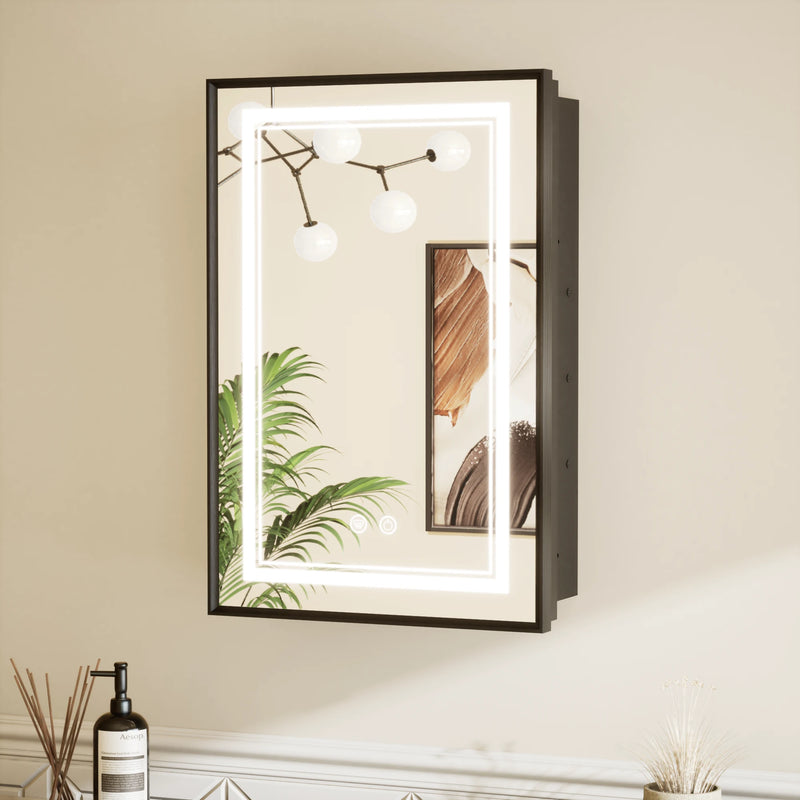
Framed LED Medicine Cabinet
Built-in outlets, IP44 waterproofing, and a 59-inch cord for plug-in flexibility.
Shop This Cabinet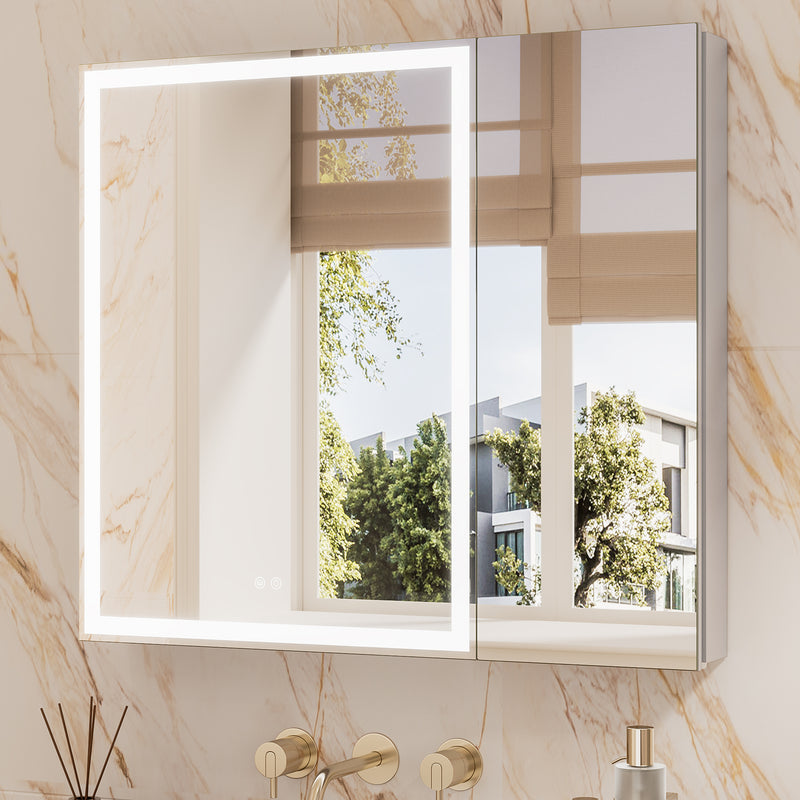
Medicine Cabinet Mirror with Lights
Adjustable color temperature and stepless dimming, sized from compact to large walls.
Shop This CabinetPlan Your Installation With Confidence
Browse the full LED medicine cabinet collection and check each product's electrical specifications before you buy.
Shop LED Medicine Cabinets