42-inch Vanity: Recommended Medicine Cabinet Width: 32–36 inches
42" Vanity? Your Medicine Cabinet Should Run 32"–36" Wide.
Here's TETOTE's exact pick list for that width range, plus the tools and steps for both surface mount and recessed installation.
Sizing a 42" Vanity Correctly
For a 42" vanity, a 32"–36" cabinet leaves 3"–5" of clearance on each side — plenty of room for the door to swing a full 90° without hitting a wall, sconce, or side splash.
6 Cabinets Built for the 32"–36" Range
Real prices at the exact width shown, pulled straight from each product page.
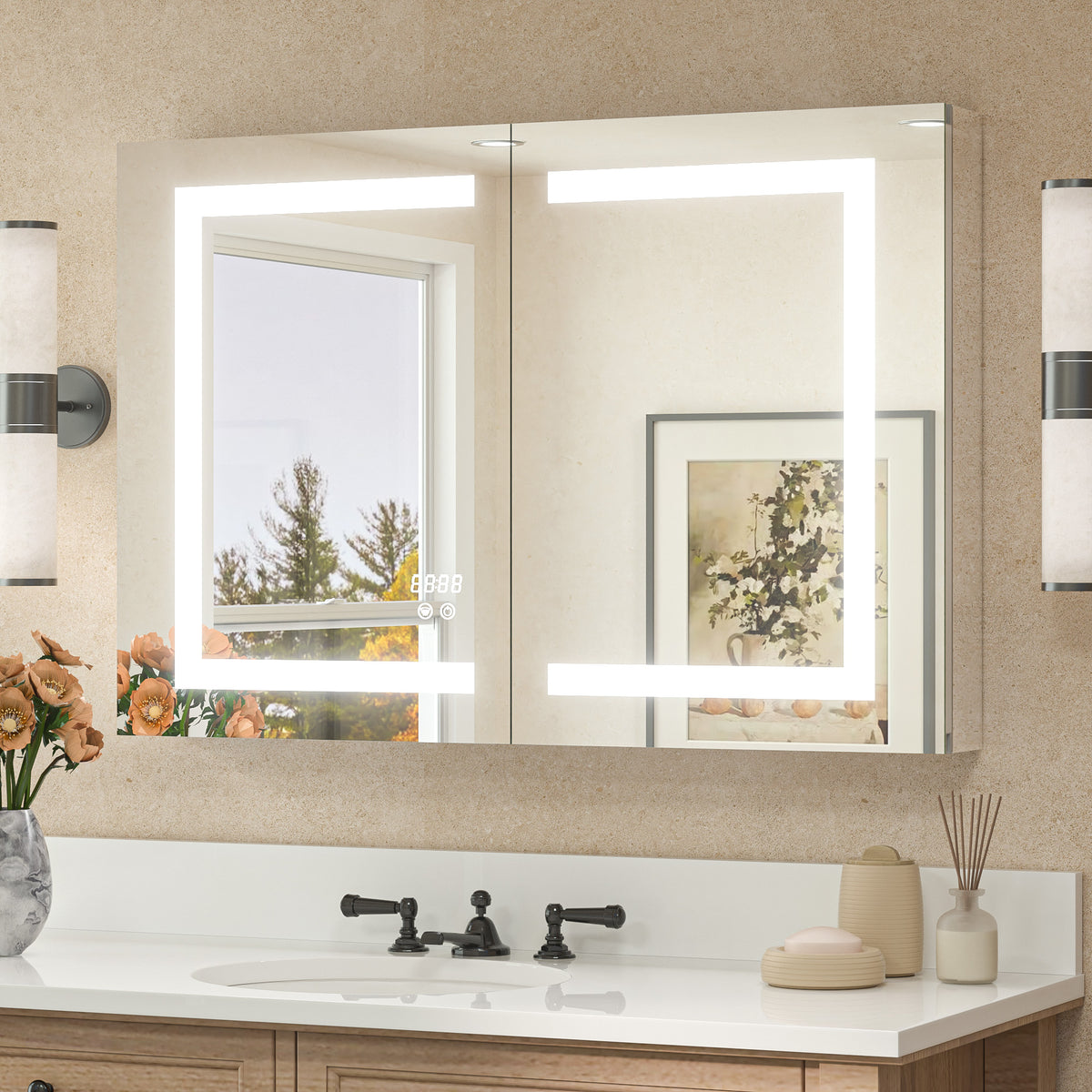
Dual-Lit LED Medicine Cabinet — 36x24
Pros & Highlights
Pros
- Best-selling LED model with 735 reviews
- Built-in outlets with USB-C charge port
- Anti-fog runs on a timer, auto-shuts off
Cons
- 24" height limits tall-item storage
- No Bluetooth speaker or clock

Trio-Lit LED Medicine Cabinet — 36x32
Pros & Highlights
Pros
- Three independently controlled light zones
- Built-in Bluetooth speaker + clock display
- Tall 32" cabinet maximizes mirror surface
Cons
- Premium price point
- Heavier — two-person install recommended

Framed LED Medicine Cabinet — 36x30
Pros & Highlights
Pros
- IP44 rating — best pick for steamy bathrooms
- Slim aluminum frame, modern aesthetic
- 30" height balances storage and mirror space
Cons
- No built-in electrical outlets
- Fewer smart features than Trio-Lit line

Medicine Cabinet with Beveled Mirror — 32x36
Pros & Highlights
Pros
- Classic beveled edge — timeless bathroom look
- Lowest price in the 32"–36" range
- Door swings left or right, your choice
Cons
- Non-LED — no integrated lighting
- New product, no reviews yet
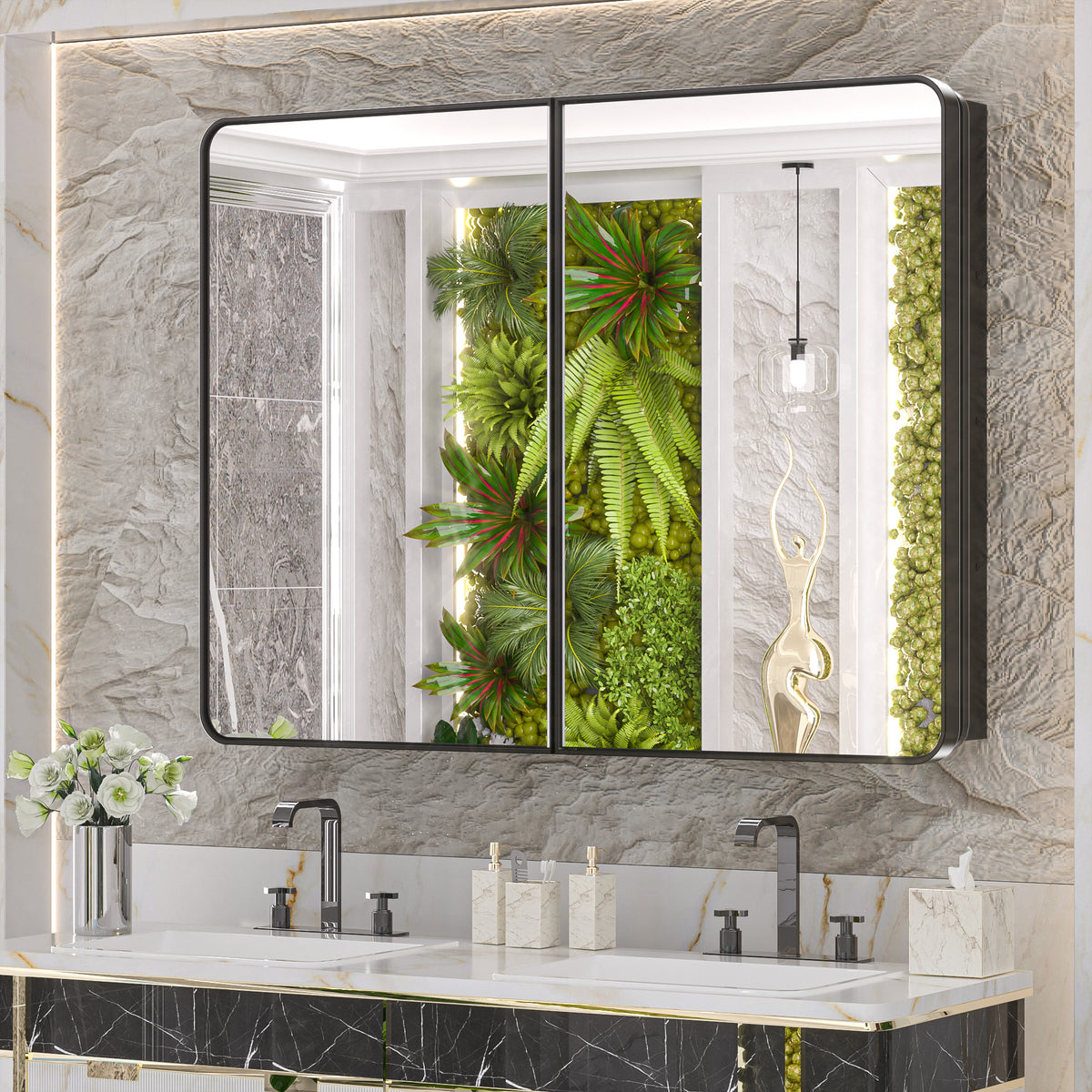
Stainless Steel Framed Medicine Cabinet — 32x40
Pros & Highlights
Pros
- Tallest cabinet here — 40" of vertical storage
- Rust-resistant frame for humid climates
- Deep interior fits large bottles upright
Cons
- Non-LED — no lighting or smart features
- 40" height may feel tall above a lower vanity

Recessed Medicine Cabinet — 36x24
Pros & Highlights
Pros
- Premium DTC soft-close hinges — smooth and quiet
- 4 adjustable shelves, best interior capacity
- Excellent value at $259.99
Cons
- Non-LED — no mirror lighting
- Assembly required (shelves + door adjustment)
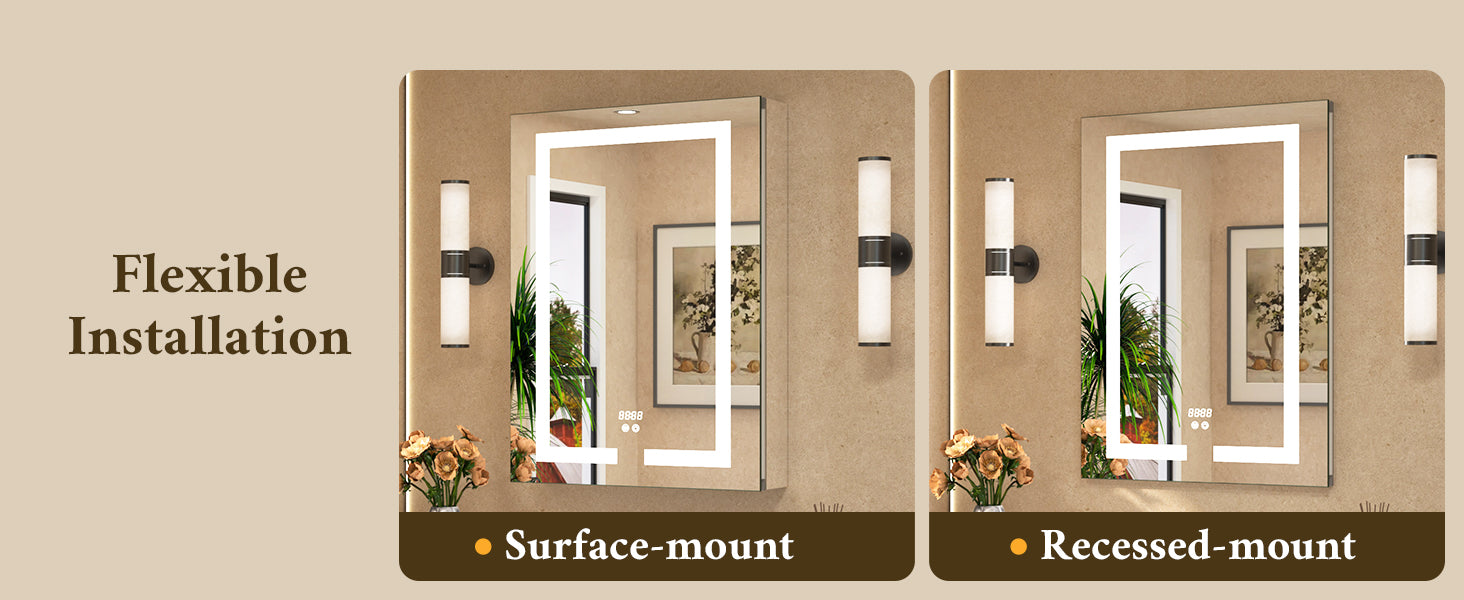
How to Install: Surface Mount vs. Recessed
Surface Mount
Mounts on top of the wall — no cutting requiredMark the wall
Hold the lower bracket level at your desired height — typically 60"–66" from the floor to the top of the mirror, and at least 3" above any faucet. Mark your drill spots.
Secure the bracket
Drill at your marks, insert wall anchors if you're not hitting a wood stud, and screw the lower bracket tightly to the wall.
Hang and lock
Set the cabinet box onto the lower bracket, hold it steady, then slide the upper brackets into the top groove to mark their screw spots. Secure the upper brackets with screws.
Recessed Mount
Sits flush inside the wall cavityPrep the wall
Trace the cabinet body onto the wall and cut the opening, checking first for electrical or plumbing lines. Frame the opening with 2x4s for structural support if needed.
Secure the cabinet
Set the cabinet into the wall opening and screw it directly into the studs through the side panels for a solid, flush fit.
Finish the fit
Adjust the door and shelf clips, then check the reveal around the frame for an even, built-in look before final tightening.
Hardware & Tools You'll Use
Frequently Asked Questions
My vanity is 42" — should I go with 32" or 36"?
Either fits well within the recommended range. A 32" cabinet gives you 5" of breathing room on each side — ideal if you have wall sconces or a tight alcove. A 36" cabinet maximizes storage and mirror surface while keeping a balanced look above a 42" vanity.
Do I need an electrician for the LED models?
Most LED cabinets ship with a plug-in cord for a standard DIY install, with an optional hardwire connection for a cord-free look — that option typically calls for a licensed electrician.
Can I switch from recessed to surface mount later?
Yes — every cabinet in this guide supports both installation types, so you're not locked in if your plans change or you discover plumbing or wiring inside the wall.
What if my wall doesn't have enough cavity depth for recessed mounting?
Go with surface mount instead. It installs directly on top of the drywall using anchors and doesn't require any wall cavity depth at all.