DIY Medicine Cabinet Installation, Done Right The First Time
DIY Medicine Cabinet Installation, Done Right The First Time
A no-nonsense, room-tested walkthrough for mounting a recessed or surface-mount medicine cabinet — including where LED, outlet, and USB models change the job.
Two Ways To Mount A Medicine Cabinet
Every medicine cabinet installs one of two ways: recessed, where the cabinet sits inside the wall cavity for a flush, built-in look, or surface mount, where it hangs on the wall like a piece of furniture. The right choice depends on your wall, your timeline, and how much cutting you're willing to do — not on which style looks nicer, since most cabinets are available in either format.

Recessed Mount
The cabinet body is set into the wall between the studs, leaving only the door and frame visible. It gives a custom, built-in appearance and frees up floor-to-ceiling visual space in small bathrooms.
- Needs roughly 3.5" of wall depth (standard 2x4 wall)
- Requires cutting drywall and framing a rough opening
- Must confirm the bay is free of pipes, ducts, and wiring
- Best done during a renovation or wall-open project
Surface Mount
The cabinet hangs directly on the wall surface using a French cleat or mounting bracket, similar to hanging a heavy mirror. No drywall cutting required.
- Fits any wall thickness, including tile and plumbing walls
- Installs in under an hour with basic hand tools
- Adds a few inches of cabinet depth beyond the wall face
- The better choice for renters and first-time DIYers
Tools & Materials Checklist
Pull everything together before you make the first mark on the wall — most installation delays come from mid-project trips to the hardware store.
How To Install A Recessed Medicine Cabinet
Follow this sequence in order — skipping ahead to cutting before you've confirmed the wall cavity is the single most common (and costly) DIY mistake.
Find your studs and mark the opening
Use a stud finder to locate the studs on either side of your intended cabinet location, then hold the cabinet's paper template (or the cabinet box itself) against the wall to trace the rough opening in pencil. Center the cutout between two studs whenever your cabinet width allows it.
Check the cavity before you cut
Drill a small inspection hole inside the marked outline and use a flashlight or bent wire hanger to feel around for pipes, ducts, or wiring. Do not proceed to cutting if you find anything unexpected — reposition the cabinet or switch to a surface-mount model instead.
Cut the opening
Score along your pencil line with a utility knife, then cut through the drywall with a drywall saw, staying just inside the line so you can fine-tune the fit. Cut slowly near the top and bottom plates if your opening runs the full stud bay.
Dry-fit the cabinet
Slide the cabinet box into the opening without fastening it. It should sit flush with the wall face on all sides. Shim any gaps between the box and the studs so the frame won't flex once it's loaded with toiletries.
Level and fasten
With a helper holding the cabinet in place, set a torpedo level across the top edge and adjust until it reads true in both directions. Drive mounting screws through the cabinet's side flanges into the studs — never into drywall alone.
Attach the door and trim
Hang the mirrored door on its hinges, adjust the closing tension if the model has soft-close hardware, and caulk any visible gap between the cabinet frame and the wall for a finished, built-in look.
How To Install A Surface-Mount Medicine Cabinet
No drywall cutting means you can go from box to mounted cabinet in about an hour.
Mark your centerline and height
Measure and mark a vertical centerline where the cabinet will hang, then mark the top of the mounting bracket — most households center the mirror between 60" and 66" from the floor, adjusted for the tallest regular user.
Locate studs or plan for anchors
Run a stud finder along your marked height line. If studs align with the bracket's mounting points, you can screw directly into framing. If not, use rated drywall anchors sized for the cabinet's loaded weight.
Install the mounting bracket or cleat
Hold the bracket level against the wall at your marked height and trace the screw holes. Drill pilot holes, then fasten the bracket firmly — this single connection carries the entire weight of the cabinet.
Hang the cabinet
With a helper supporting the bottom, lift the cabinet so its rear bracket engages the wall cleat, then let it settle into place. Confirm it's seated fully before letting go.
Level and secure the base
Check level across the top and sides. Most surface-mount cabinets include a lower screw point through the cabinet floor or side panel — add this second fastening point to stop the cabinet from swinging when the door opens.
Installing A Lighted Medicine Cabinet
LED medicine cabinets with built-in outlets and USB ports install the same way structurally, with one extra consideration: power.
Once power is confirmed safe, most LED cabinets mount exactly like their non-lit counterparts — the light bar and touch dimmer are pre-wired into the unit, so your job is the physical mount plus one final wire connection.
Common Installation Mistakes
Skipping The Cavity Check
Cutting into a wall without confirming it's clear of plumbing or wiring is the single most expensive DIY mistake in this project. Always drill an inspection hole first.
Anchoring Into Drywall Alone
Plastic anchors are not rated for a loaded medicine cabinet on their own. Hit a stud wherever possible, and use anchors rated for the cabinet's full weight when you can't.
Eyeballing Level
A cabinet that's off by even a few degrees will show immediately once the door is closed and the mirror is reflecting a crooked ceiling line. Always check level twice before final fastening.
Mounting Too High Or Low
Measure the height of the people who'll use it daily before marking your centerline — the "standard" 60"–66" range is a starting point, not a rule.
Medicine Cabinet Installation FAQ
Do I need a plumber or electrician to install a medicine cabinet?
What is the standard height to install a medicine cabinet?
Can I install a recessed medicine cabinet in any wall?
Surface mount vs. recessed — which is easier for a first-time DIYer?
How much weight can a medicine cabinet mounting bracket hold?
Shop Medicine Cabinets Built For This Install
Every cabinet below supports the methods covered in this guide, with hardware included for recessed or surface mounting where noted.
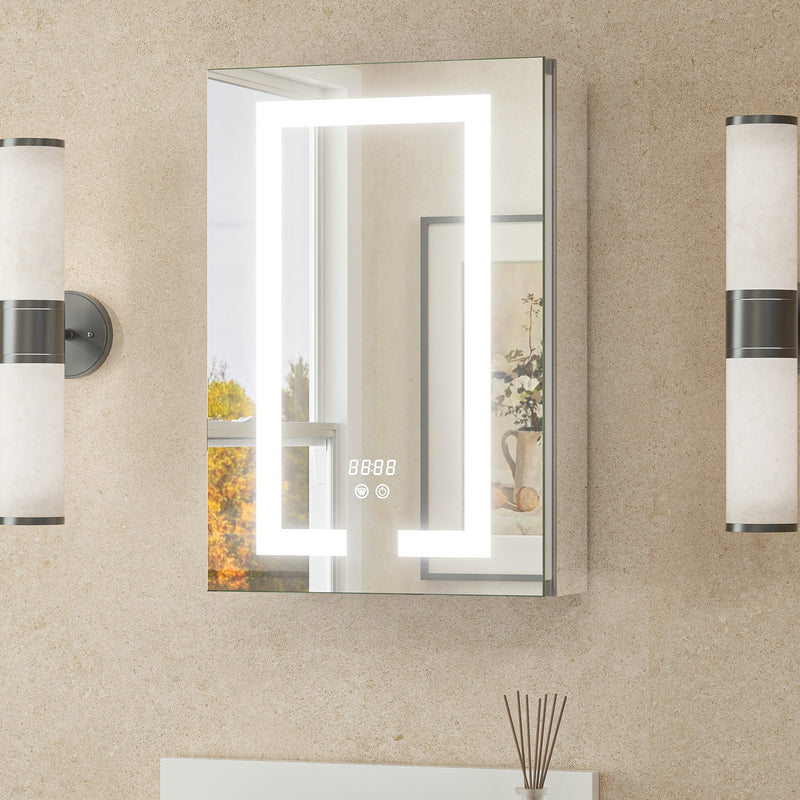 Hottest Save 10%
- Built-in outlets & USB ports
- 3-color dimmable, anti-fog
- Sizes 16x24 up to 48x32
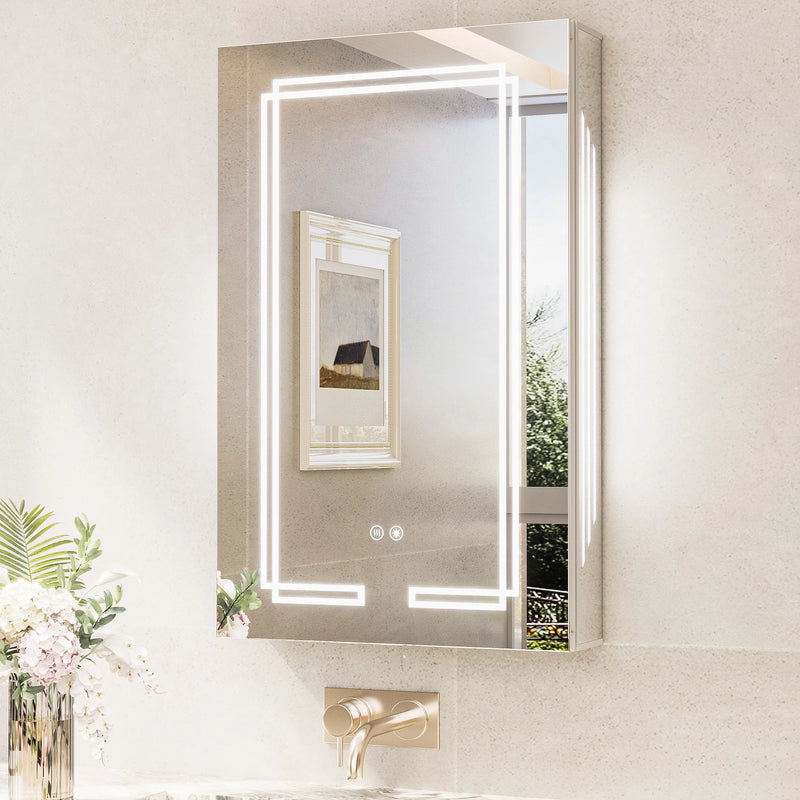 Tri-Lit
- Stepless 3-color dimming
- Anti-fog with memory function
- Sizes 20x26 up to 48x32
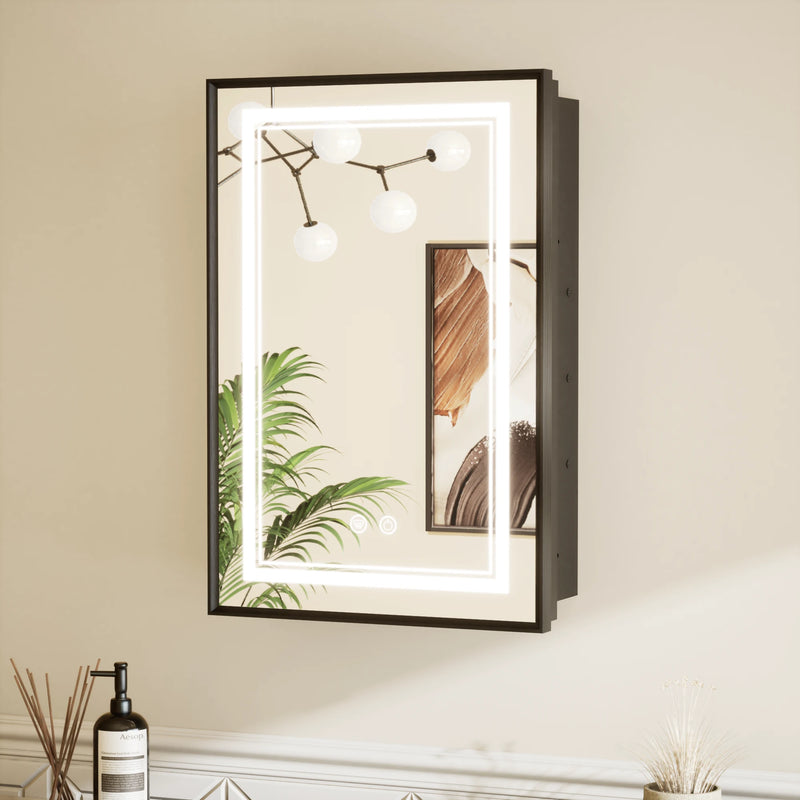 2 Outlets
- Dual built-in outlets
- Metal-framed LED mirror door
- Sizes 16x24 up to 36x30
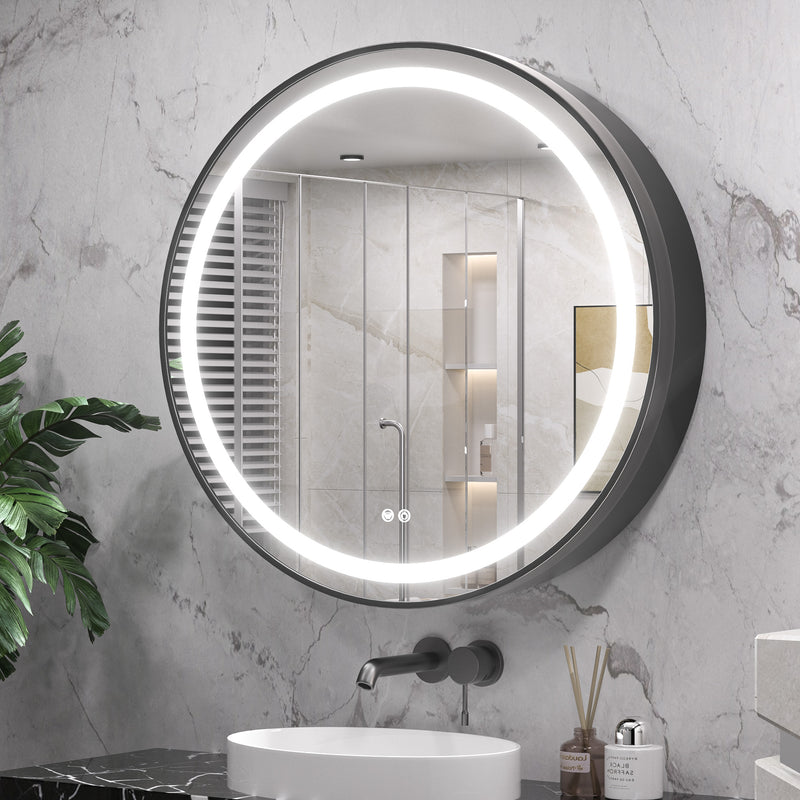
- Round profile, 3-color front-lit LED
- Slim metal frame
- Sizes 24" – 30" diameter
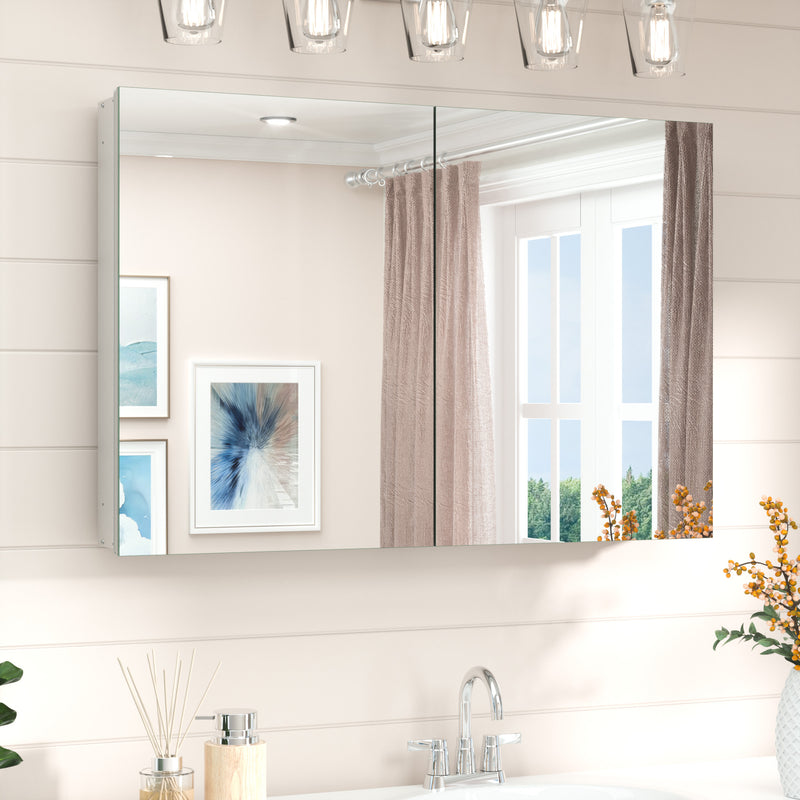 Budget Friendly
- Soft-close door
- Adjustable interior shelves
- Widest size range: 12x36 to 64x32
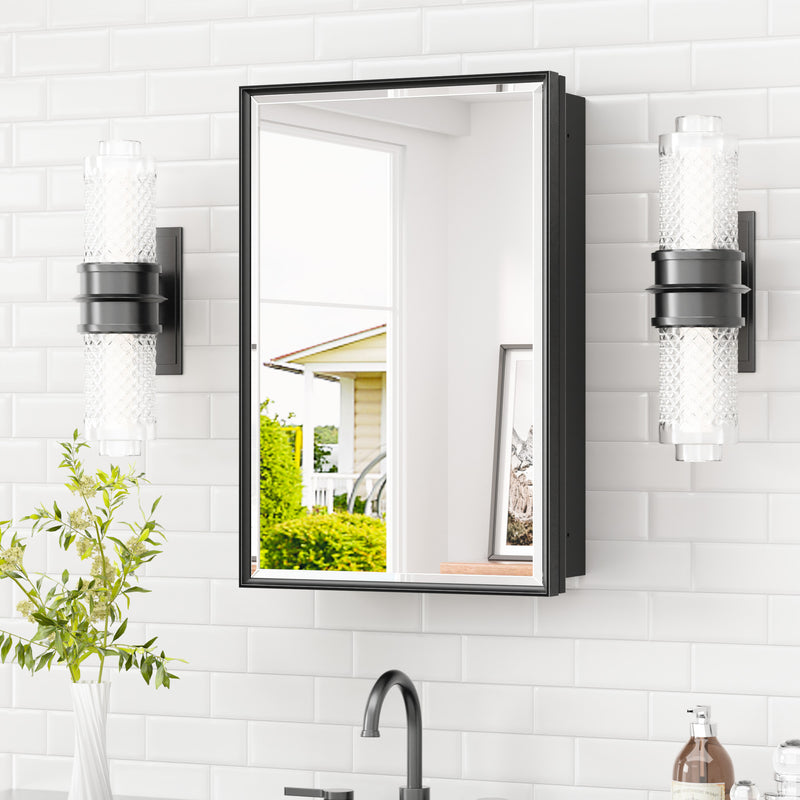
- Beveled mirror door
- Surface mount install
- Sizes 16x24 up to 60x30
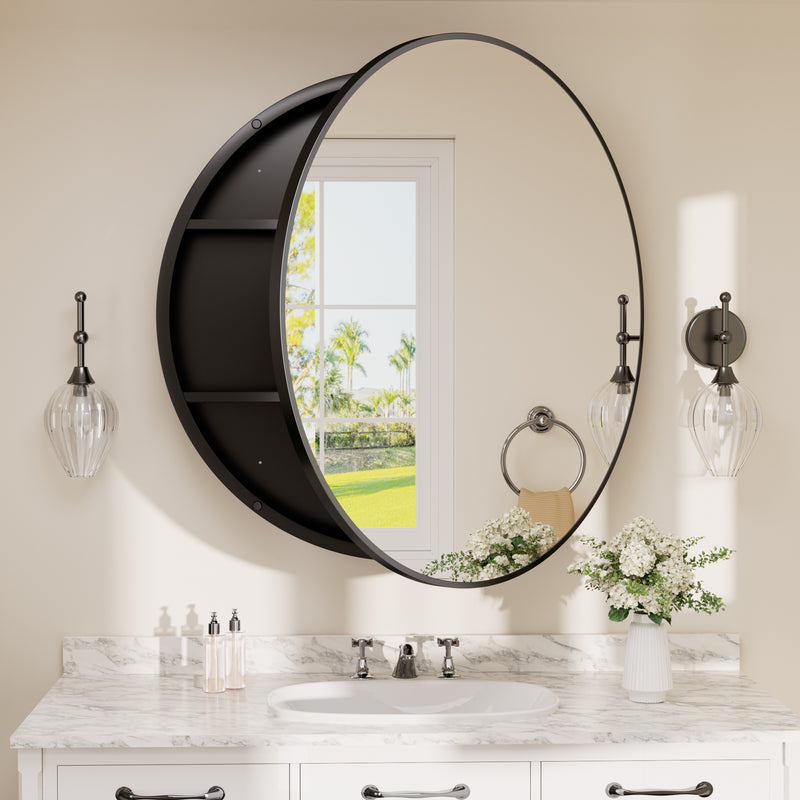
- Compact round profile
- Metal-framed surface mount
- Ideal for powder rooms
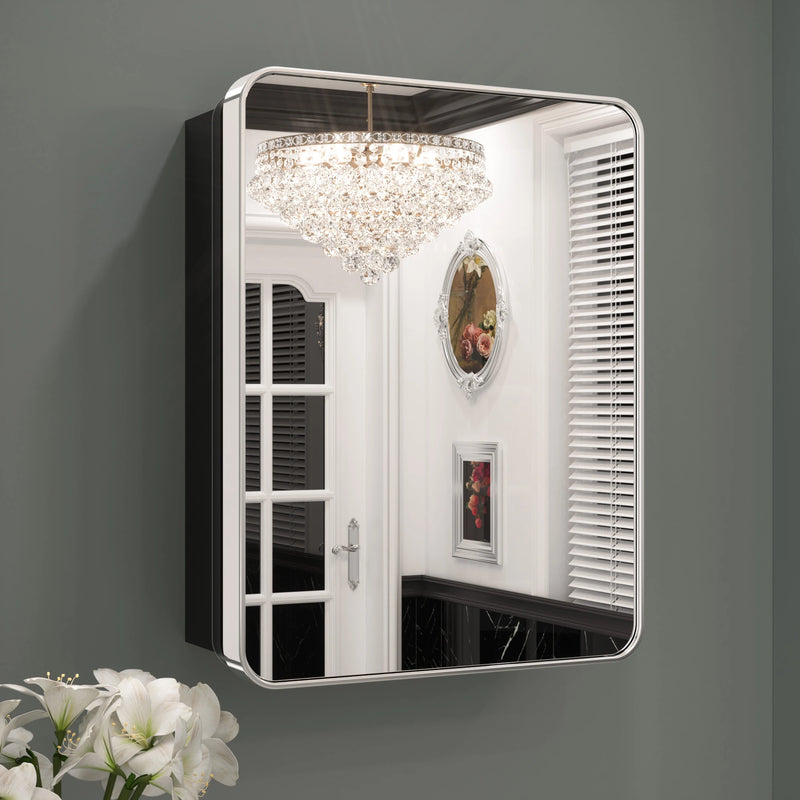 Save 15%
- Rust-resistant stainless frame
- Adjustable interior shelves
- Sizes 16x24 up to 60x32