What Size Medicine Cabinet Do I Need? Complete Size Guide
What Size Medicine Cabinet Do I Need? Complete Size Guide
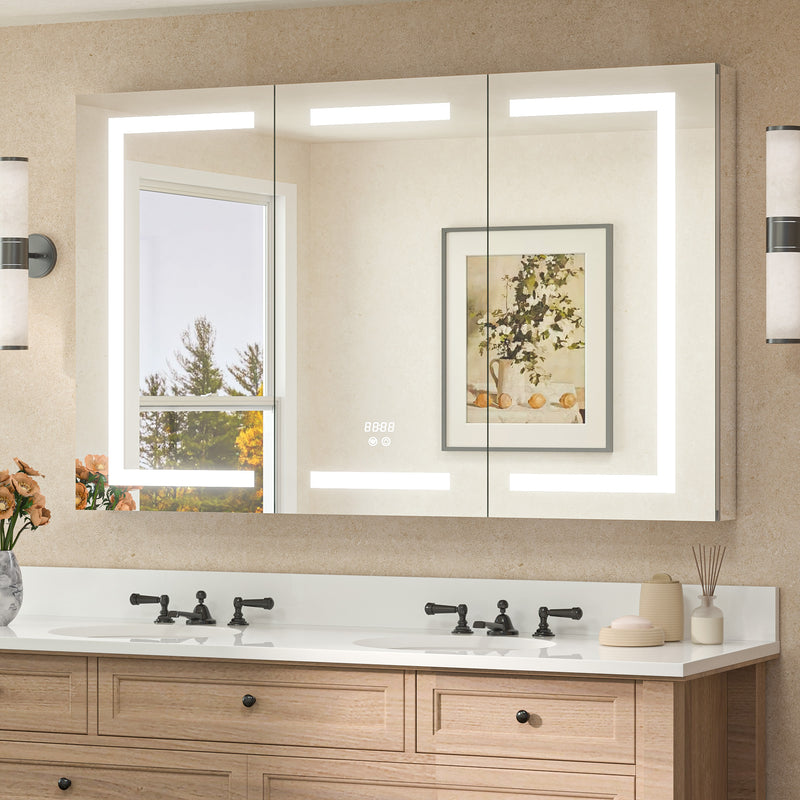
The right medicine cabinet should feel proportional to your vanity, leave room for the door to swing open, and match how much storage and lighting you actually need. Use the chart and size guide below, then jump to our step-by-step install instructions once you've picked a size.
Key Factors to Consider
When selecting a medicine cabinet, the key factors to consider are your vanity width, the overall wall space available, your lighting plan, and whether you prefer a single large cabinet or multiple smaller ones. Here is a practical guide from Tetote to help you choose the right fit.
Base It on Vanity Width
| Vanity Width | Recommended Medicine Cabinet Width |
|---|---|
| 18-inch Vanity | 14–16 inches |
| 20-inch Vanity | 16–18 inches |
| 24-inch Vanity | 18–22 inches |
| 30-inch Vanity | 24–26 inches |
| 36-inch Vanity | 28–32 inches |
| 42-inch Vanity | 32–36 inches |
| 48-inch Vanity | 36–42 inches |
| 60-inch Vanity (Single Sink) | 48–54 inches |
| 60-inch Vanity (Double Sink) | Two 20–26 inch cabinets, or one 50–54 inch cabinet |
| 72-inch Vanity (Double Sink) | Two 28–32 inch cabinets, or one 60–66 inch cabinet |
Shop by Size
Once you know your target width, browse cabinets already sorted into the right range:

How to Install Your Medicine Cabinet
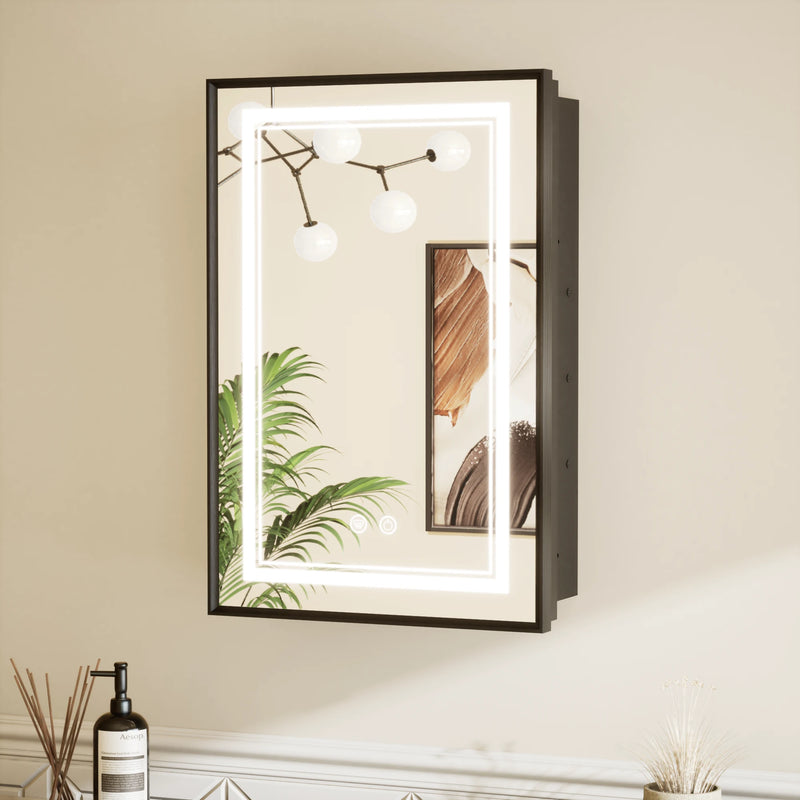
Every Tetote medicine cabinet can be installed one of two ways: recessed (flush into the wall, between the studs) or surface mount (mounted directly onto the wall's surface). Here's how each installation works.
Recessed Installation
Locate the studs and check clearance
Use a stud finder to confirm there's an open stud bay at your chosen height, free of plumbing, electrical lines, or ductwork behind the wall.
Mark and cut the opening
Trace the cabinet's rough-in dimensions (included in your manual) onto the wall, then carefully cut the drywall along the marked lines.
Frame the opening if needed
Add horizontal blocking between studs if the cutout is wider than the stud bay, giving the cabinet box something solid to screw into on all sides.
Insert and secure the cabinet box
Slide the cabinet into the opening, check it's level, then screw through the mounting flanges into the studs or blocking.
Attach the door and trim
Hang the mirrored door on its hinges, adjust for an even reveal, and caulk around the frame edge for a finished, flush look.
Surface Mount Installation
Choose and mark your mounting height
Hold the cabinet (or its template) against the wall at a comfortable height and mark the top edge and center line with a pencil.
Find studs or plan for anchors
Locate wall studs with a stud finder where possible; if the mounting points fall between studs, use the drywall/tile anchors included in your hardware kit.
Install the mounting bracket or rail
Attach the included wall bracket or French cleat level and secure, double-checking it's plumb with a level before driving in all screws.
Hang the cabinet on the bracket
Lift the cabinet onto the installed bracket or cleat, then confirm it sits flush and level against the wall.
Secure the base and check the door swing
Add any bottom or side screws specified in your manual, then open and close the door fully to make sure it swings freely without rubbing the wall.
Frequently Asked Questions
Can I switch from surface mount to recessed later?
Not without opening the wall — recessed installation requires cutting into drywall for the cabinet box, so it's worth deciding on your mounting style before you buy if you're unsure.
What if my vanity is an odd width, like 34 inches?
Round down slightly rather than up. It's better to leave a little extra wall space on either side of the cabinet than to choose one that's too wide for the vanity below it.
Do LED medicine cabinets install differently than non-lit ones?
The mounting process is the same either way. The only extra step is running power — LED cabinets can typically be hardwired to a switch or simply plugged into a nearby outlet, depending on the model.
Ready to Find Your Size?
Browse the full Tetote medicine cabinet collection, filterable by size, finish, and lighting.
Shop All Medicine Cabinets →