60" Vanity? Recommended Medicine Cabinet Width for Single and Double Vanity
60" Vanity? Your Medicine Cabinet Match Depends on Single vs. Double Sink.
One big cabinet for a single-sink layout — or a pair of smaller ones flanking a double vanity. Here's the exact range for each scenario, with TETOTE's top picks for both.
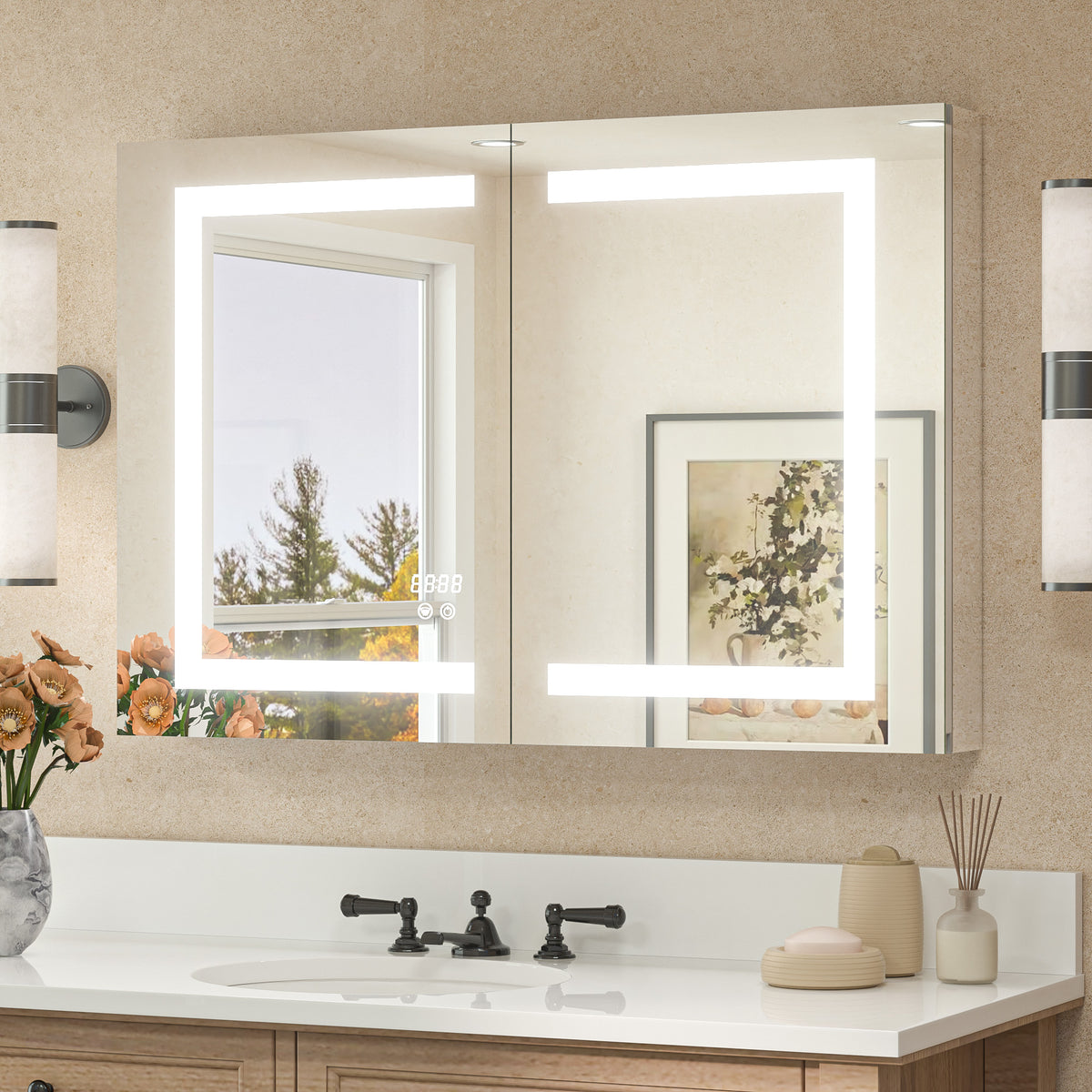
Dual-Lit LED Medicine Cabinet — 48x32
Pros & Highlights
Pros
- Double-sided lighting — lights up interior without closing door
- Smart Clock app auto-syncs time via Bluetooth
- 2 outlets + 2 USB ports for charging
Cons
- Premium price for the large 48" size
- Heavy — two-person install recommended
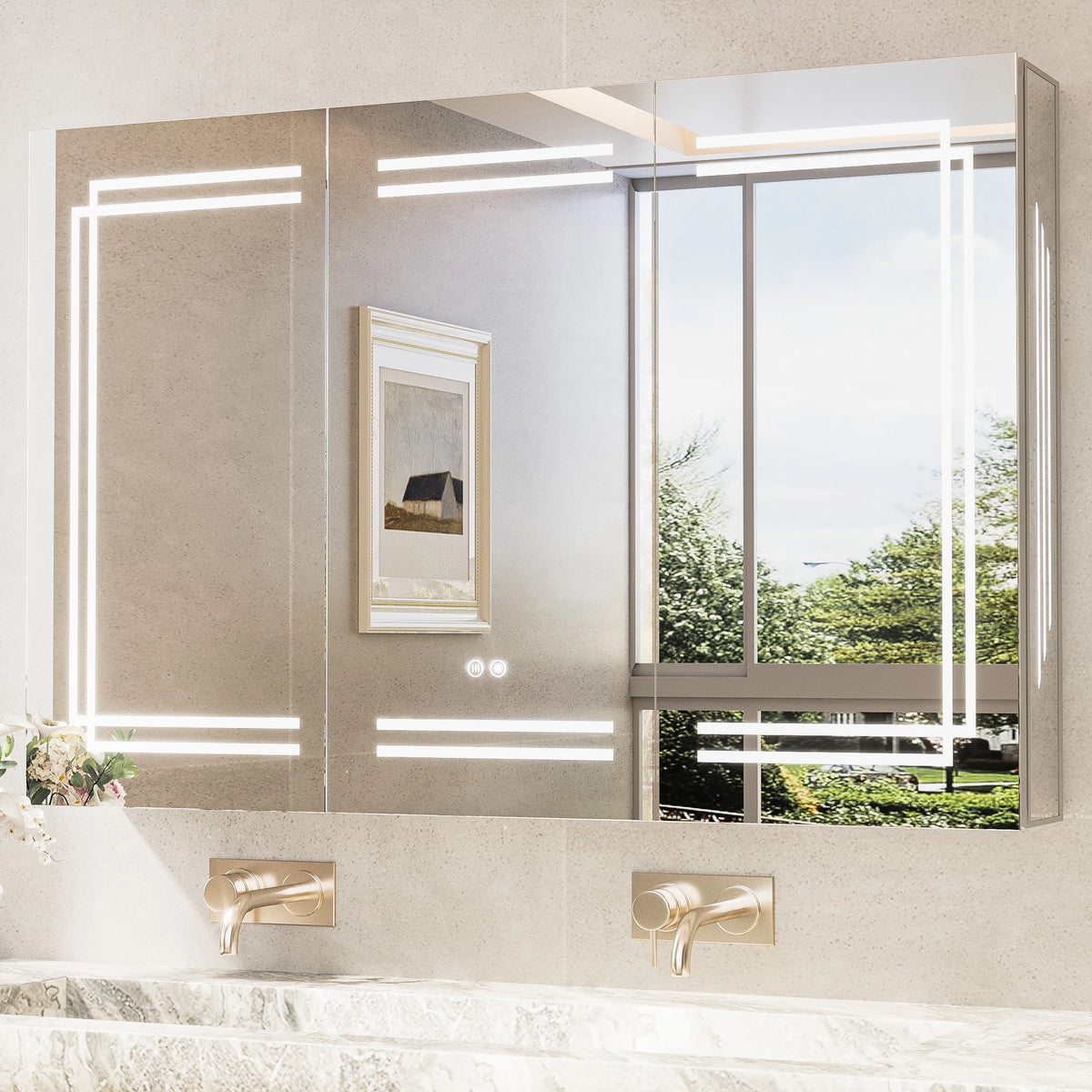
Trio-Lit LED Medicine Cabinet — 48x32
Pros & Highlights
Pros
- Three independent light zones — front, interior, and side ambient
- Copper-free mirror with shatter-proof film
- 6063-T5 anodized aluminum frame, moisture-proof
Cons
- Highest price in this category
- No built-in power outlets

Stainless Steel Framed Medicine Cabinet — 48x32
Pros & Highlights
Pros
- Heavy-duty stainless steel — rust-proof and moisture-proof
- Electroplated brushed finish, rounded corners
- Adjustable shelves for flexible storage
Cons
- Non-LED — no integrated lighting
- 32" height may require electrical relocation

Recessed Medicine Cabinet — 48x24
Pros & Highlights
Pros
- Premium DTC hinges — smooth, quiet, wide opening angle
- 4 adjustable shelves for maximum organization
- Best value at $299.99 for a 48" cabinet
Cons
- Non-LED — mirror lighting not included
- Assembly required
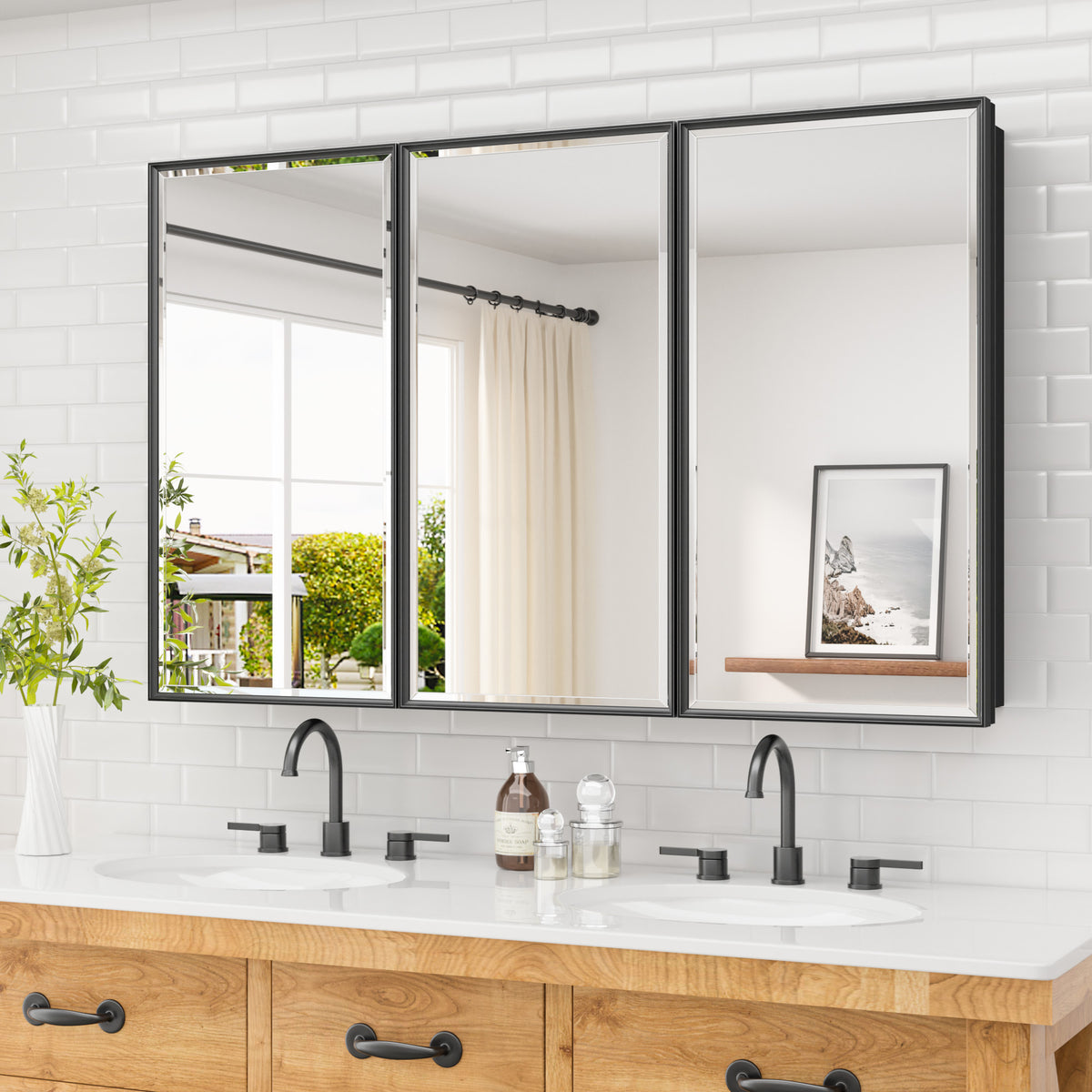
Beveled Medicine Cabinet with Mirror — 48x30
Pros & Highlights
Pros
- Elegant concave frame with floating-effect bevel
- Available in black, brushed nickel, white
- Copper-free shatter-proof mirror glass
Cons
- Non-LED — no built-in lighting
- Carbon steel body (heavier than aluminum)
For a double-sink 60" vanity, the cleanest look is a 20"–26" wide cabinet centered over each sink basin. That gives you 4"–10" of space between them and about the same on each outer edge. If you prefer a single uninterrupted mirror, choose a 50"–54" wide cabinet instead.
Dual-Lit LED Medicine Cabinet
Pros & Highlights
Pros
- Pairs perfectly — one over each sink basin
- Each unit has 2 outlets + USB for each user
- Independent defogger on each cabinet
Cons
- Two cabinets = two electrical connections
- Some sizes may be out of stock

Trio-Lit LED Medicine Cabinet
Pros & Highlights
Pros
- Side lighting + front + interior for premium ambiance
- Built-in Bluetooth speaker and clock in each unit
- Anodized aluminum frame, won't rust
Cons
- Higher per-unit cost for a pair
- No power outlets on this model

Framed LED Medicine Cabinet
Pros & Highlights
Pros
- IP44 rated — ideal for steamy double-sink bathrooms
- Slim aluminum frame, modern look in pairs
- Soft-close hinges on both units
Cons
- No built-in electrical outlets
- No Bluetooth clock feature
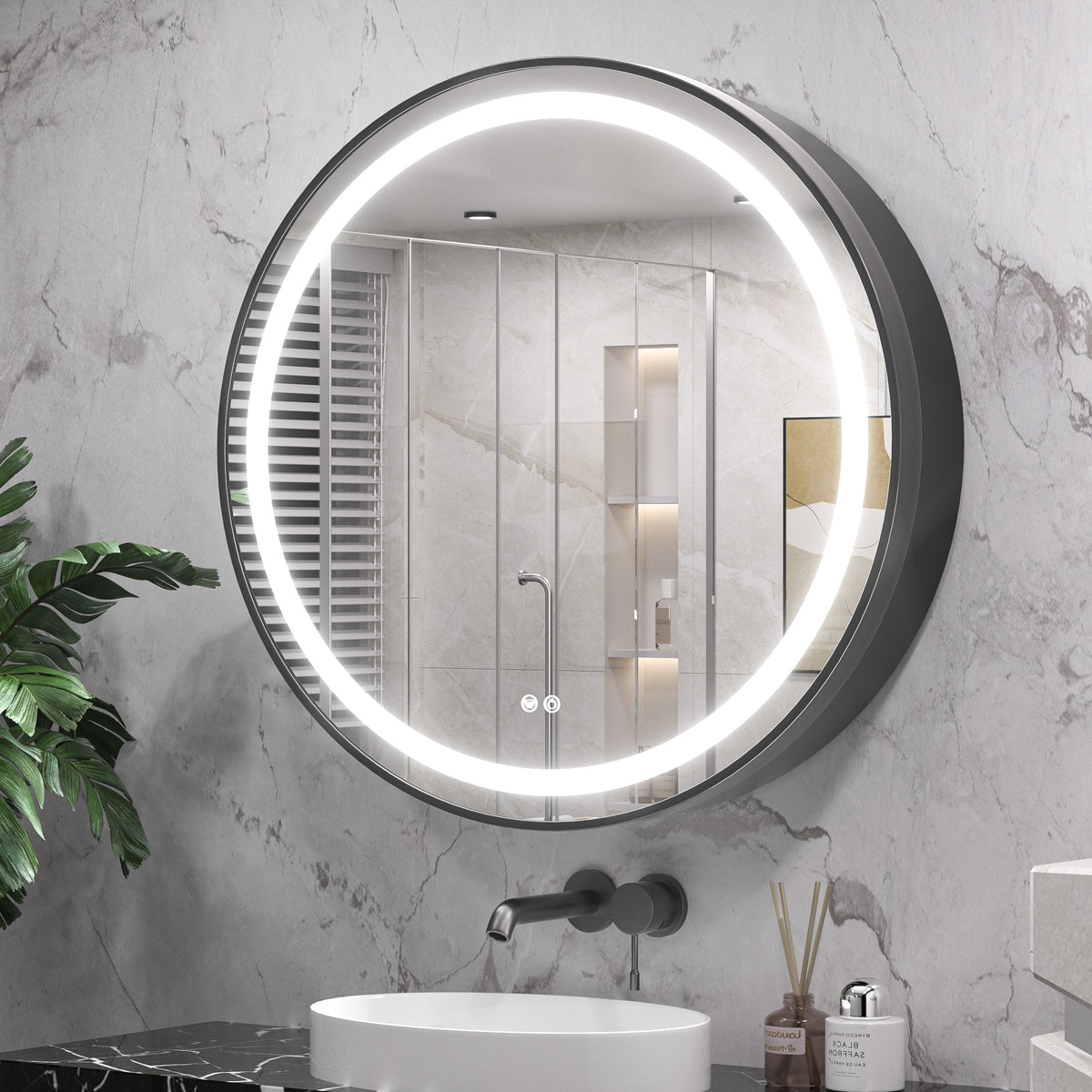
Round LED Mirror Cabinet — 24"
Pros & Highlights
Pros
- Unique round shape breaks up rectangular bathroom lines
- Front-lit LED with 3 color temperatures
- Built-in outlet for charging devices
Cons
- Smaller storage capacity than square cabinets
- Round shape limits shelf configuration
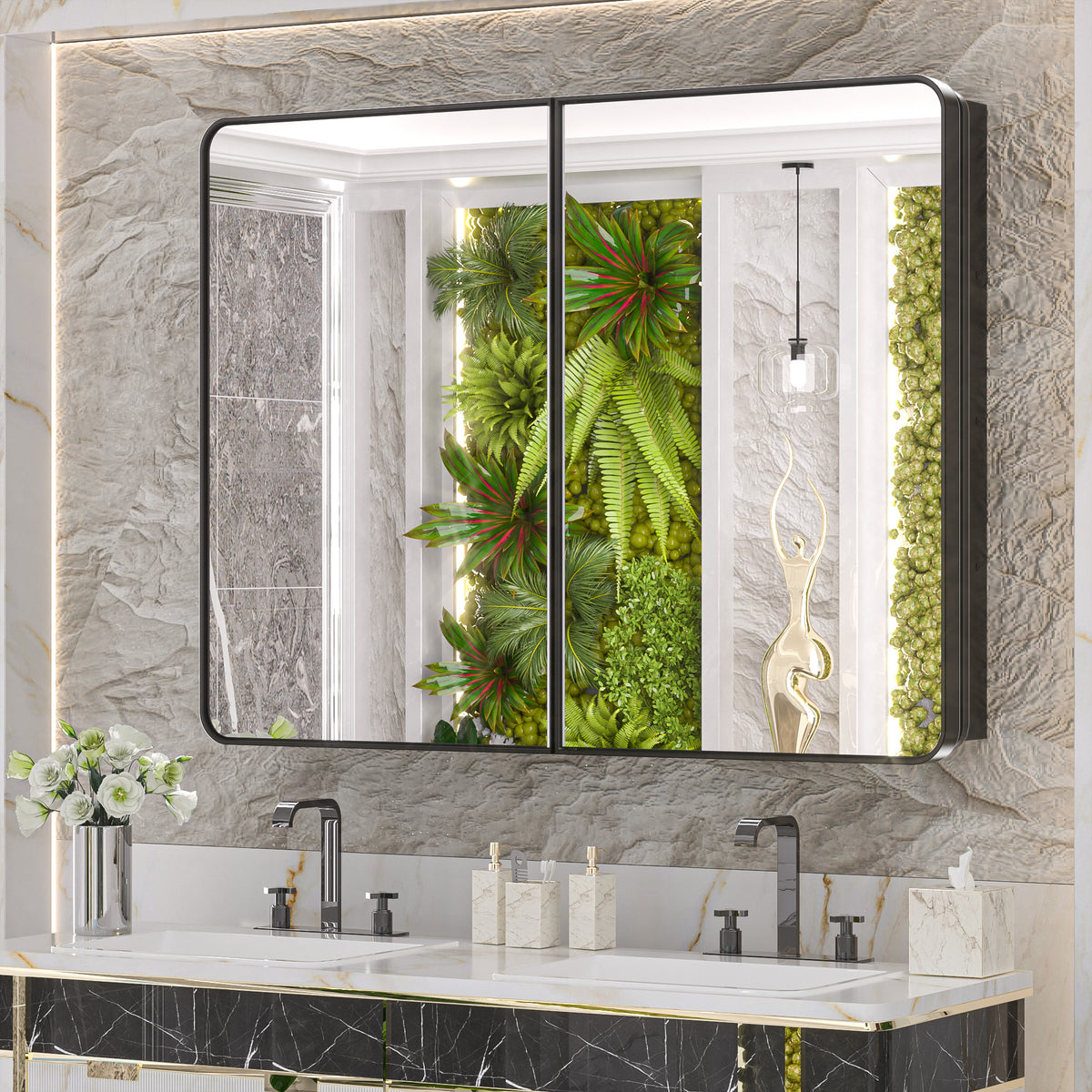
Stainless Steel Framed Medicine Cabinet — 26x20
Pros & Highlights
Pros
- Rust-resistant stainless steel, ideal for humid bathrooms
- Deep interior fits tall bottles upright
- Silent magnetic catch for quiet closing
Cons
- Non-LED — no mirror lighting
- Heavier than aluminum alternatives

Recessed Medicine Cabinet — 20x26
Pros & Highlights
Pros
- Budget-friendly — two units cost under $450 total
- Premium DTC soft-close hinges on each cabinet
- 4 adjustable shelves per unit for ample storage
Cons
- Non-LED — no integrated lighting
- Assembly required for each cabinet
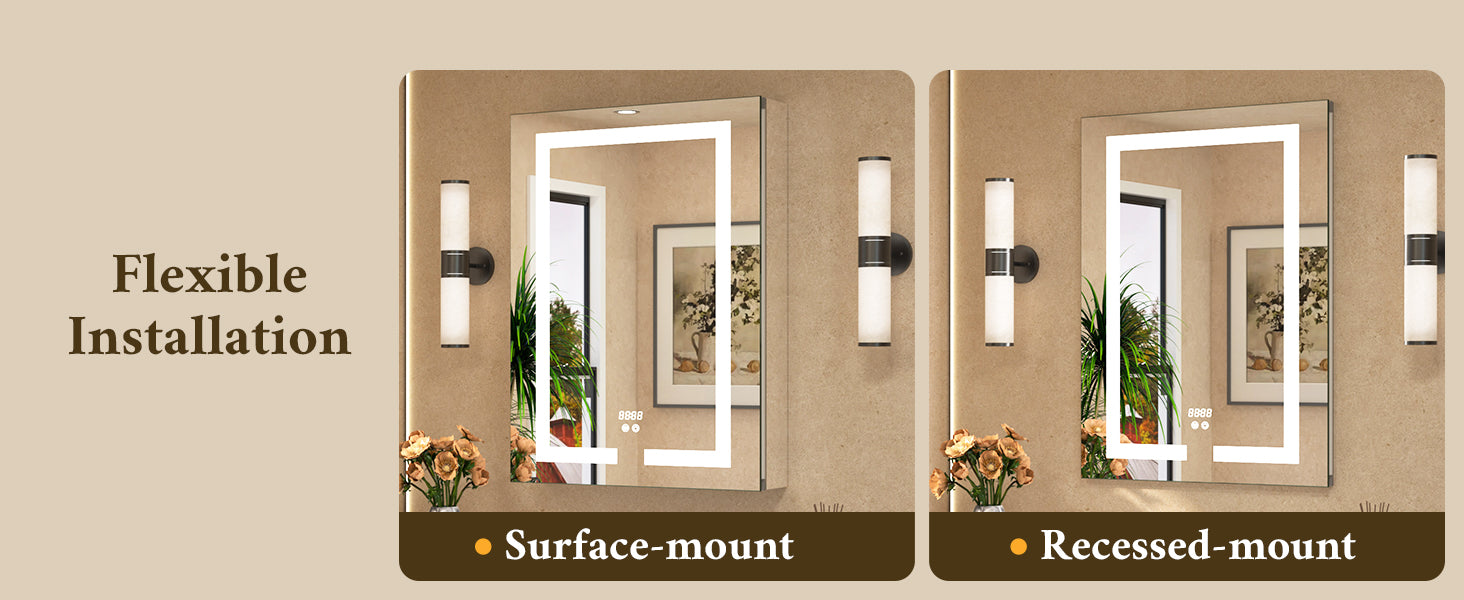
How to Install: Surface Mount vs. Recessed
Surface Mount
Mounts on top of the wall — no cutting requiredMark the wall
Hold the lower bracket level at your desired height — typically 60"–66" from the floor to the top of the mirror, and at least 3" above any faucet. Mark your drill spots.
Secure the bracket
Drill at your marks, insert wall anchors if you're not hitting a wood stud, and screw the lower bracket tightly to the wall.
Hang and lock
Set the cabinet box onto the lower bracket, hold it steady, then slide the upper brackets into the top groove to mark their screw spots. Secure the upper brackets with screws.
Recessed Mount
Sits flush inside the wall cavityPrep the wall
Trace the cabinet body onto the wall and cut the opening, checking first for electrical or plumbing lines. Frame the opening with 2x4s for structural support if needed.
Secure the cabinet
Set the cabinet into the wall opening and screw it directly into the studs through the side panels for a solid, flush fit.
Finish the fit
Adjust the door and shelf clips, then check the reveal around the frame for an even, built-in look before final tightening.
Hardware & Tools You'll Use
Frequently Asked Questions
My vanity is 60" with two sinks — should I do two cabinets or one big one?
Two smaller cabinets (20"–26" each) centered over each sink gives you the most balanced look and doubles your storage. A single 50"–54" cabinet creates a seamless mirror across the whole vanity — cleaner visually, but less storage and harder to install due to the weight and width.
What size gap should I leave between two medicine cabinets over a double vanity?
For a 60" vanity with two 24" cabinets, center each cabinet over its sink basin. That typically leaves 6"–12" between the cabinets and about the same on each outer edge — plenty for sconces or a backsplash.
Do I need an electrician for the LED models?
Most LED cabinets ship with a plug-in cord for a standard DIY install, with an optional hardwire connection for a cord-free look — that option typically calls for a licensed electrician.
Can I surface-mount a 48" cabinet myself?
Yes — the bracket system is designed for one-person installation. But a 48" cabinet is heavy; we recommend having a helper hold it steady while you secure the upper brackets.