How to Fix a Loose Medicine Cabinet Door?
How to Fix a Loose Medicine Cabinet Door
A loose or misaligned medicine cabinet door is annoying — and ignoring it can lead to bigger problems. Whether you're dealing with a sagging hinge, crooked frame, or a failing soft-close damper, this guide shows you how to fix it with basic tools and a few minutes of work.
Table of Contents
1. Diagnose the Problem 2. Tightening Hinge Screws 3. Aligning the Door 4. Soft-Close Mechanism Adjustment 5. Fixing the Latch and Magnet 6. When to Call a Professional FAQ1. Diagnose the Problem
Before reaching for a screwdriver, figure out exactly what's wrong. Different symptoms point to different fixes.
2. Tightening Hinge Screws
Loose hinge screws are the most common cause of a sagging door. Here's the fix.
Open the door and inspect the hinges
Most medicine cabinets have 2–3 screws per hinge plate. Check both the door-side and frame-side plates — both can work loose over time.
Tighten each screw
Using a Phillips-head screwdriver, turn each screw clockwise until snug. Don't overtighten — stripped threads or a cracked frame are harder to fix than a loose screw.
Fix stripped screw holes
If a screw spins freely, the hole is stripped. Remove the screw, insert a wooden toothpick coated in wood glue into the hole, snap it off flush, and reinsert the screw. For metal-framed cabinets, use a slightly larger screw or a machine-thread repair insert.
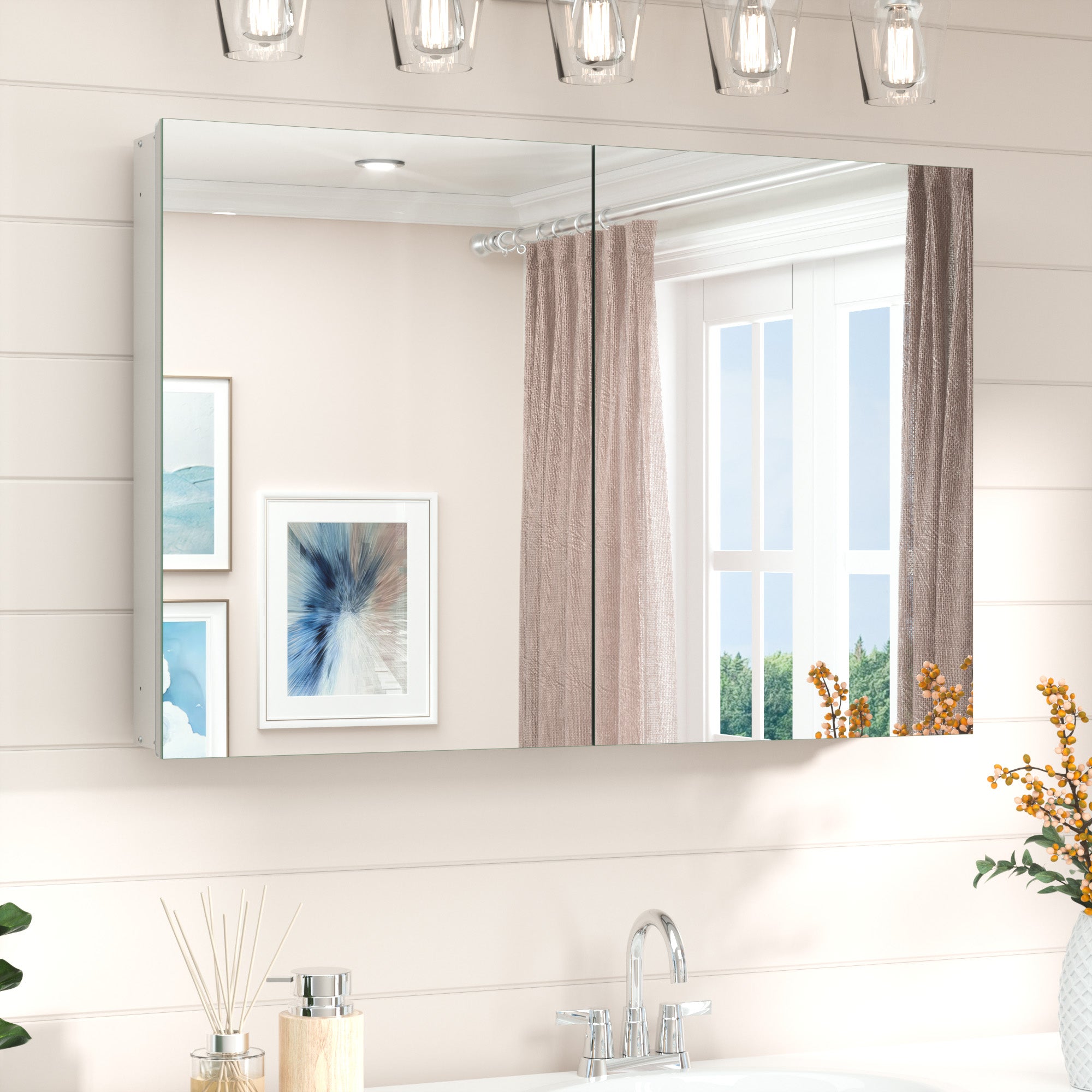
Models like the Tetote MC011 Soft-Close Cabinet use premium hinges rated for 100K+ cycles. Even with high-quality hardware, screws can loosen from daily opening and closing. Regular inspection helps prevent sagging before it starts.
For cabinets mounted in bathrooms with high humidity, moisture can accelerate corrosion on hinge screws. Check for rust and replace any corroded screws with stainless steel equivalents.
Mark each hinge position with painter's tape before loosening any screws. This gives you a reference point for realignment and makes it easier to return the door to its original position if needed.
3. Aligning the Door
If the door is still crooked after tightening all screws, you need to adjust hinge alignment.
Loosen the hinge mounting screws
Don't remove them — just loosen enough to allow slight movement of the hinge plate. Work one hinge at a time.
Shift the door into position
For vertical adjustment: slide the door up or down on the frame-side plate, then retighten. For horizontal adjustment: some hinges have a depth-adjustment screw — turn clockwise to pull the door closer, counterclockwise to push it out.
Check and repeat
Close the door slowly and inspect the gap between the door and frame. The gap should be even on all sides. Repeat the adjustment until the gap is uniform.
- Phillips-head screwdriver
- Painter's tape (for marking position)
- Level (to verify cabinet is level)
- Toothpicks + wood glue (for stripped holes)
- Silicone lubricant (for sticking hinges)
- Cabinet frame is warped from moisture
- Wall mounting bracket is loose or damaged
- Door glass is separating from the frame
- Hinges are bent or physically damaged
4. Soft-Close Mechanism Adjustment
Soft-close hinges use hydraulic dampers to prevent slamming. When they fail, it's usually one of three things.
If your soft-close hinge is still under warranty, contact the manufacturer before replacing it yourself. Tetote medicine cabinets include a 3-year warranty covering hinge and hardware defects. Many issues can be resolved with a free replacement part.
5. Fixing the Latch and Magnet
The magnetic catch or latch keeps the door securely closed. Here's how to fix common latch problems.
Magnetic catch not holding — The magnet may have shifted out of alignment. Loosen the mounting screws, reposition the magnet so it aligns with the metal strike plate on the door, and retighten.
Magnet has fallen off — Reattach using epoxy or strong double-sided adhesive. Avoid super glue — it can crack under the stress of daily door operation.
Latch is sticking — Apply a small amount of silicone lubricant to the latch mechanism. Wipe away any excess. Oil-based lubricants attract dust and can gum up over time.
Door bounces open — Usually an alignment issue. Check the door gap first. If alignment is correct but the door still bounces, replace the magnet.

6. When to Call a Professional
Not every door issue is a DIY fix. Here's when it's time to bring in a pro.
- Cabinet frame is cracked around hinge mounting points — structural damage requires cabinet replacement.
- Mirror glass is cracked or separating from the door frame — glass replacement is a safety issue.
- Wall-mount failure — the cabinet is pulling away from the wall. This is a safety hazard and needs immediate professional attention.
- Severely stripped hinge holes — if toothpick repairs don't hold and the frame can't accept larger screws, the cabinet may need replacement.
- Soft-close hinge replacement — if you can't find an exact match, a pro can retrofit compatible hinges or recommend a replacement cabinet.
Frequently Asked Questions
Can I fix a loose medicine cabinet door without removing the cabinet?
Yes — most hinge and alignment issues can be fixed with the cabinet in place. You only need to remove it if the wall mounting brackets are loose or if the cabinet frame is damaged behind the hinge plates.
What tools do I need to tighten medicine cabinet hinges?
A Phillips-head screwdriver is all you need for most hinge tightening. For stripped screw holes, add a wooden toothpick and wood glue. For alignment, you may need a level and painter's tape to mark positions.
How do I know if my soft-close hinge is broken?
If the door closes normally without resistance (like a standard hinge), the soft-close mechanism has failed. If it closes too fast, the hydraulic damper has lost fluid. In both cases, the hinge needs replacement.
Can I replace just one hinge or do I need to replace all of them?
You can replace a single hinge if you find an exact match. For best results, replace hinges in pairs (top and bottom) to ensure even operation. If you can't find matching hinges, replace all hinges on the door.
Why does my medicine cabinet door keep popping open?
Usually a misaligned magnetic catch or weak magnet. First check alignment — loosen the magnet, reposition it, and retighten. If it still pops open, replace the magnet. Also verify that the cabinet is level and not twisted from an uneven wall.
Is it safe to use WD-40 on cabinet hinges?
WD-40 is a solvent, not a lubricant — it can attract dust and eventually make hinges stickier. Use a silicone-based lubricant specifically designed for hinges and door mechanisms. Apply sparingly and wipe excess.
How long does it take to fix a loose medicine cabinet door?
Most hinge tightening and alignment fixes take 10–15 minutes. Stripped screw hole repairs add about 10 minutes (including glue dry time). Soft-close hinge replacement takes 20–30 minutes including removal and installation.
What if my medicine cabinet door won't close because it's hitting the frame?
Check for obstructions first — something may be sticking out from a shelf. If the door physically contacts the frame, the hinge alignment needs adjustment. Loosen hinge screws, shift the door away from the contact point, and retighten.
Can humidity cause medicine cabinet door problems?
Yes — humidity can cause wood frames to swell, hinge screws to corrode, and magnetic catches to weaken. Silicone lubricant on hinges and a dehumidifier in the bathroom help prevent these issues. Tetote medicine cabinets with IP44 waterproof rating (like MC010) resist moisture damage.
NO MORE TRROUBLE! Shop Tetote Medicine Cabinets
Every cabinet ships free within 48 hrs, backed by a 3-year warranty and ETL certification.

MC002 Dual-Lit LED Cabinet
Dual front + back LED lighting, 2 outlets + 2 USB, anti-fog, smart memory. 9 sizes up to 48×32. Hardwire. From $202.49.
View Product →
MC001 Trio-Lit LED Cabinet
3-zone Trio-Lit lighting, stepless dimming, Bluetooth clock, detachable door, smart memory. Surface mount. From $233.99.
View Product →
MC010 Framed LED Cabinet
Plug-in or hardwire. Slim aluminum frame in black or white. 2 outlets, 3-color dimmable, anti-fog, IP44. From $189.99.
View Product →
MC011 Soft-Close Cabinet
Soft-close hinges rated for 100K+ cycles, 3 adjustable glass shelves, recessed or surface mount. Assembly required. From $89.99.
View Product →Find your perfect medicine cabinet
Free shipping 48 hrs within • 3-year warranty • ETL certified • 16 US warehouses
Shop All Medicine Cabinets